
Grass Seed Calculator
Turn any lawn area into pounds and whole bags of grass seed — 11 grass types, new-lawn and overseeding rates, waste allowance and cost handled.
Enter Lawn Details
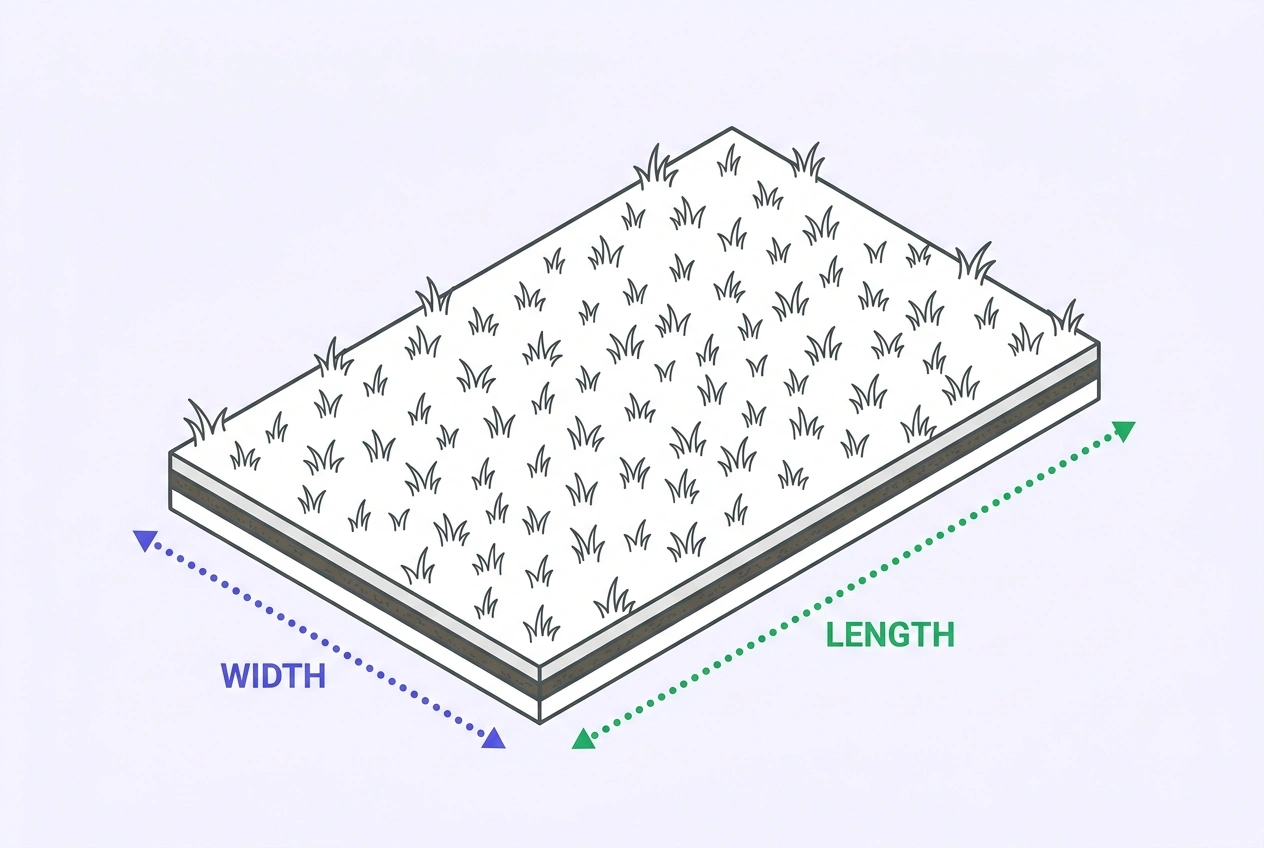 50 feet
20 feet
Lawn Area: 1,000 sq ft


Results
Seed Needed
Coverage
Cost Estimate
Assumptions
Quick Reference
Seeding Notes
What You Get
- ✓Free — no sign-up, nothing to install
- ✓Live results as you type
- ✓Rectangle, circle and custom-area lawns
- ✓11 grass types, cool- and warm-season
- ✓New-lawn and overseeding rates at once
- ✓Custom rate from your seed bag's label
- ✓Whole bags — you cannot buy a partial bag
- ✓Coverage per bag and effective coverage
- ✓Pounds and kilograms at once
- ✓Price per pound or per bag, 10 currencies
- ✓Export a PDF seed sheet in one click
- ✓Shareable link that saves your inputs
ON THIS PAGE:
How the Seed Math Works
Every grass seed estimate on this page is a four-step chain. First the lawn becomes an area — length times width for a rectangle, π times the squared radius for a circle, or the measured total for an irregular yard. Second the area is divided by 1,000 and multiplied by the seeding rate, which is always quoted in pounds per 1,000 square feet. Third a waste allowance covers slopes, bird loss, runoff and seed that has aged past its tested date. Fourth the result is rounded up to whole bags, because seed is sold by the bag and the counter will not split one. The whole chain:
net lbs = (area sq ft ÷ 1,000) × rate
with waste = net lbs × (1 + waste%)
bags = ceil( with waste ÷ bag lbs )
bag coverage = bag lbs ÷ rate × 1,000 sq ft
The seeding rate is not one number because seed size is not one size. Kentucky bluegrass seed is so tiny that a pound holds up to 2 million seeds and covers 1,000 square feet at just 2 to 3 lbs; tall fescue seed is several times larger, so the same ground needs 8 to 10 lbs. That is why the calculator loads a rate per species instead of using a single generic figure — pick the wrong rate and you either run out halfway across the lawn or drown it in seed.
Overseeding halves the rate because existing turf already shades the soil: the new seed only has to thicken gaps, not colonize bare ground. The halving rule holds for the conventional turfgrasses in the table below, but premium coated blends sometimes print their own overseeding rate — when the bag and the calculator disagree, the bag wins, and the custom-rate field is how you enforce it.
For scale, per-acre figures (1 acre = 43,560 sq ft): Kentucky bluegrass needs about 130–175 lbs per acre for a new lawn, tall fescue 350–435, perennial ryegrass 300–435, and Bermuda about 90. Per-acre numbers are why bulk buyers think in 50 lb bags — a one-acre fescue lawn is roughly nine of them before waste.
Seeding Rates by Grass Type
Standard agronomic rates in pounds of seed per 1,000 square feet, compiled from university extension guidance. Overseeding uses about half the new-lawn rate for every species listed:
| Grass Type | New Lawn (lbs/1,000) | Overseeding (lbs/1,000) | Season | Germination |
|---|---|---|---|---|
| Kentucky Bluegrass | 3 | 1.5 | Cool | 14–28 days |
| Tall Fescue | 8 | 4 | Cool | 7–14 days |
| Perennial Ryegrass | 7 | 3.5 | Cool | 5–10 days |
| Fine Fescue | 5 | 2.5 | Cool | 7–14 days |
| Creeping Red Fescue | 5 | 2.5 | Cool | 7–14 days |
| Sun & Shade Mix | 6 | 3 | Cool | 5–14 days |
| Bermuda (hulled) | 2 | 1 | Warm | 10–28 days |
| Zoysia | 2 | 1 | Warm | 14–21 days |
| Bahia | 10 | 5 | Warm | 14–28 days |
| Buffalo | 3 | 1.5 | Warm | 14–30 days |
| Centipede | 0.5 | 0.25 | Warm | 14–21 days |
One common lawn grass is deliberately missing from this table: St. Augustine is not sold as seed — it is established from plugs, sprigs or sod, so check the sod calculator instead. And because seed size drives the rate, mixing species in one blend changes the math: a bluegrass-heavy mix runs closer to 3–4 lbs per 1,000 while a fescue-and-rye contractor blend runs 8–10. The bag label states the rate for exactly what is inside, which is why the calculator's custom field exists.
When to Plant: Cool vs Warm Season
Timing decides whether the seed grows at all — seed put down in the wrong season germinates poorly no matter how generous the quantity. Cool-season grasses want warm soil with cooling air; warm-season grasses want soil that has fully warmed:
| Grass Family | Best Window | Backup Window | Avoid |
|---|---|---|---|
| Cool-season (bluegrass, fescue, ryegrass) | Early fall — late August to mid-October, soil 50–65°F | Early spring, March–April | Summer heat and mid-summer drought |
| Warm-season (Bermuda, zoysia, Bahia, buffalo, centipede) | Late spring — May to June, soil fully warmed | Early summer | Fall and winter as soil cools |
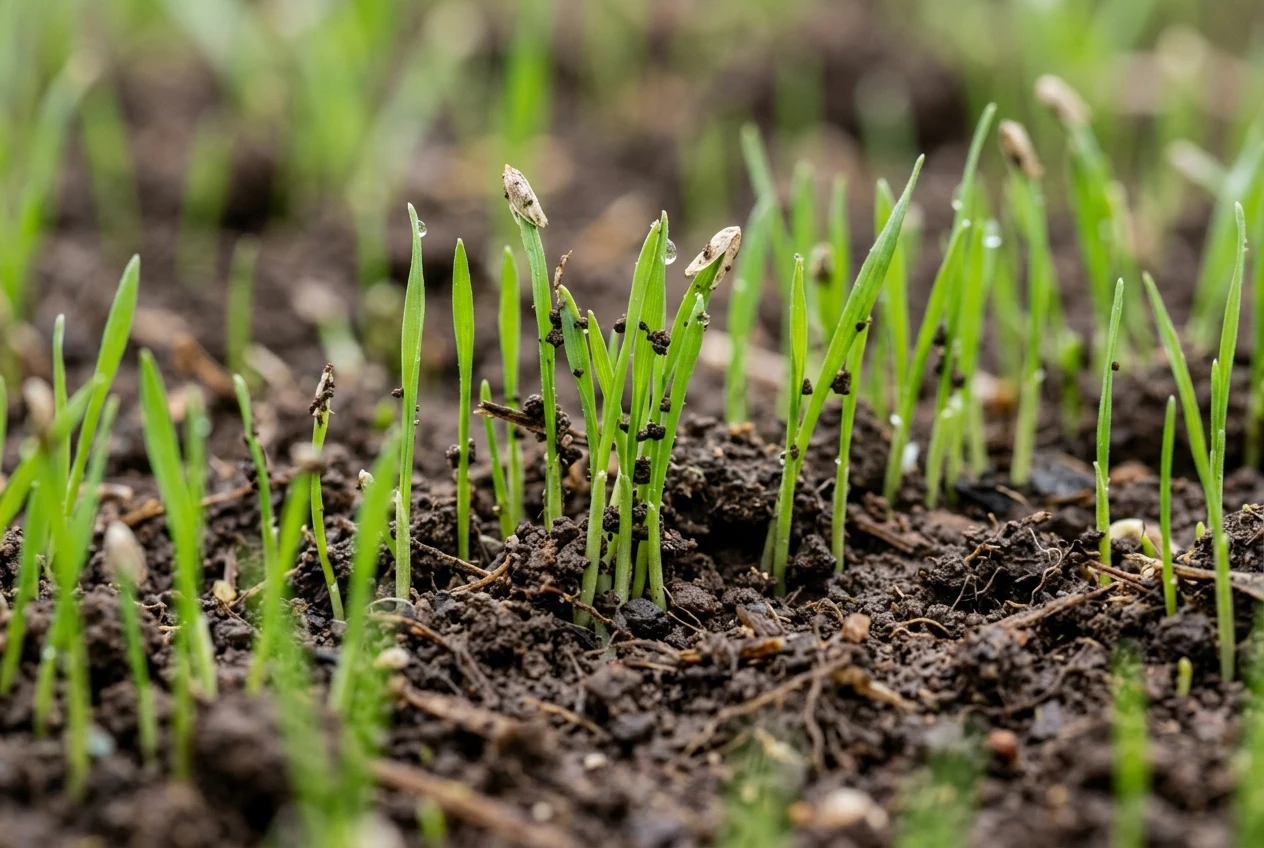
Early fall wins for cool-season lawns because the soil is still warm enough for fast germination while the air is cooling, weeds are losing their grip, and two more months of growing season remain before dormancy. Spring plantings work but hand the advantage to crabgrass and other summer weeds. Water is the other half of timing: the seedbed must stay consistently moist for the entire germination window — 5 to 30 days depending on species — which usually means light watering once or twice a day until the seedlings are up.
Worked Example: 1,000 sq ft Sun & Shade Lawn
Here is the page's own default order run end to end — these are the numbers you see on load:
- Lawn: 50 ft × 20 ft rectangle → 1,000 sq ft.
- Rate: Sun & Shade Mix, new lawn → 6 lbs per 1,000 sq ft.
- Net seed: 1,000 ÷ 1,000 × 6 = 6.00 lbs.
- Waste allowance: 10% for bird loss and uneven spreader passes → 6.00 × 1.10 = 6.60 lbs.
- Bags: 6.60 ÷ 20 lb bag = 0.33 → 1 whole bag at the counter.
- Coverage check: that one bag covers 20 ÷ 6 × 1,000 = 3,333 sq ft at the new-lawn rate — the lawn is covered three times over if you spread it all, which is why the leftover keeps for next season when stored sealed and dry.
- Cost: at $4.50 per lb → 6.60 × $4.50 ≈ $29.70; a 20 lb bag at $45 → $45 flat.
Now overseed the same lawn instead: the rate halves to 3 lbs per 1,000, net seed drops to 3.00 lbs, waste brings it to 3.30 lbs, and one bag still covers it — with 16,667 sq ft of bag coverage remaining. That asymmetry is the whole overseeding economy: the existing turf does the covering, the seed only fills the gaps.
Common Grass Seed Estimating Mistakes
- Buying by bag, not by area. Grabbing "a bag" before measuring the lawn is how half-finished seeding jobs happen. Work area → rate → pounds → bags, in that order — the calculator runs the chain in one pass.
- Using one rate for every grass. Seeding tall fescue at the bluegrass rate leaves a thin stand; seeding bluegrass at the fescue rate wastes most of the bag. Species rate first, quantity second.
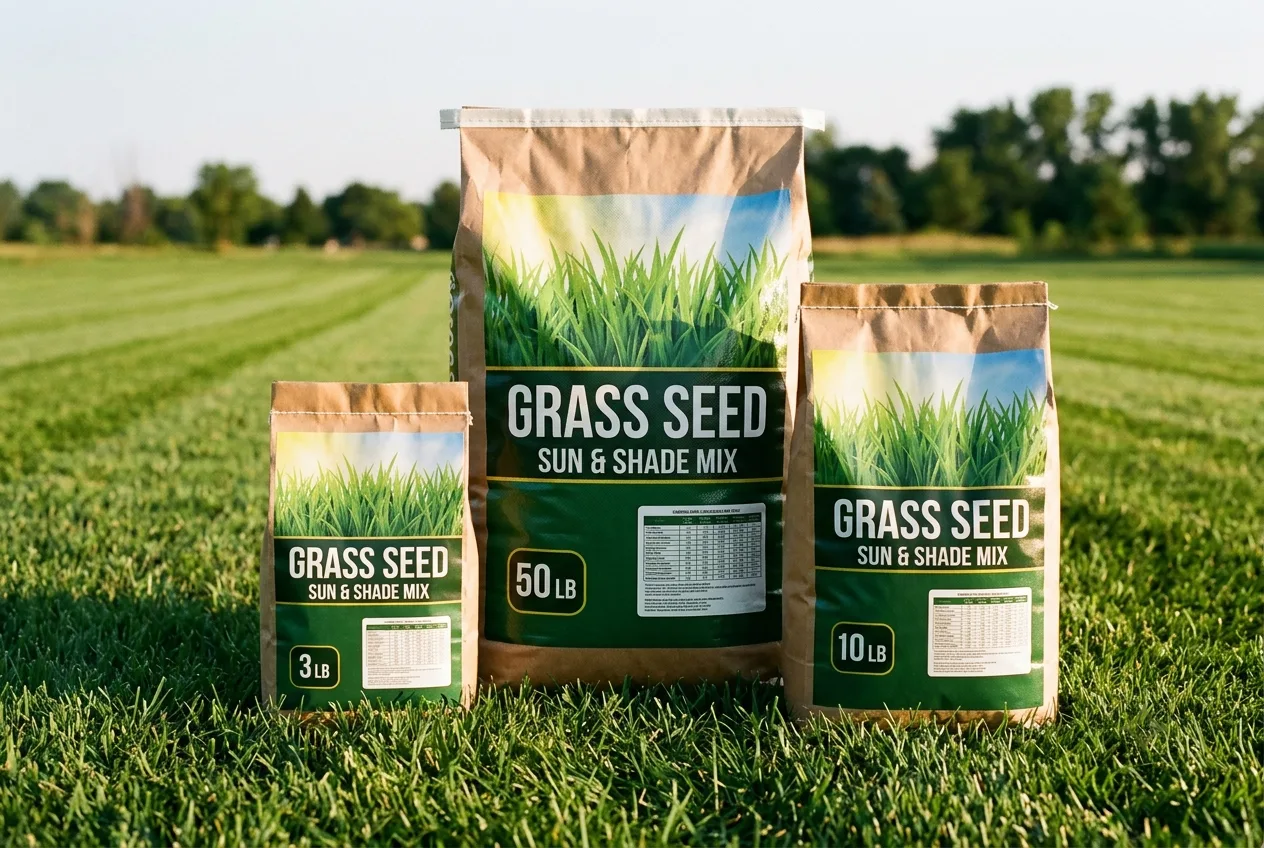
- Ignoring the bag label. Coated and premium blends frequently print their own rate, and coated seed is partly coating by weight. When the label and the standard table disagree, enter the label's number as a custom rate.
- Skipping soil contact. Thrown seed sitting on thatch or dead grass mostly feeds birds. Rake or dethatch first, spread, then rake lightly to settle seed 1/8–1/4 inch into the soil.
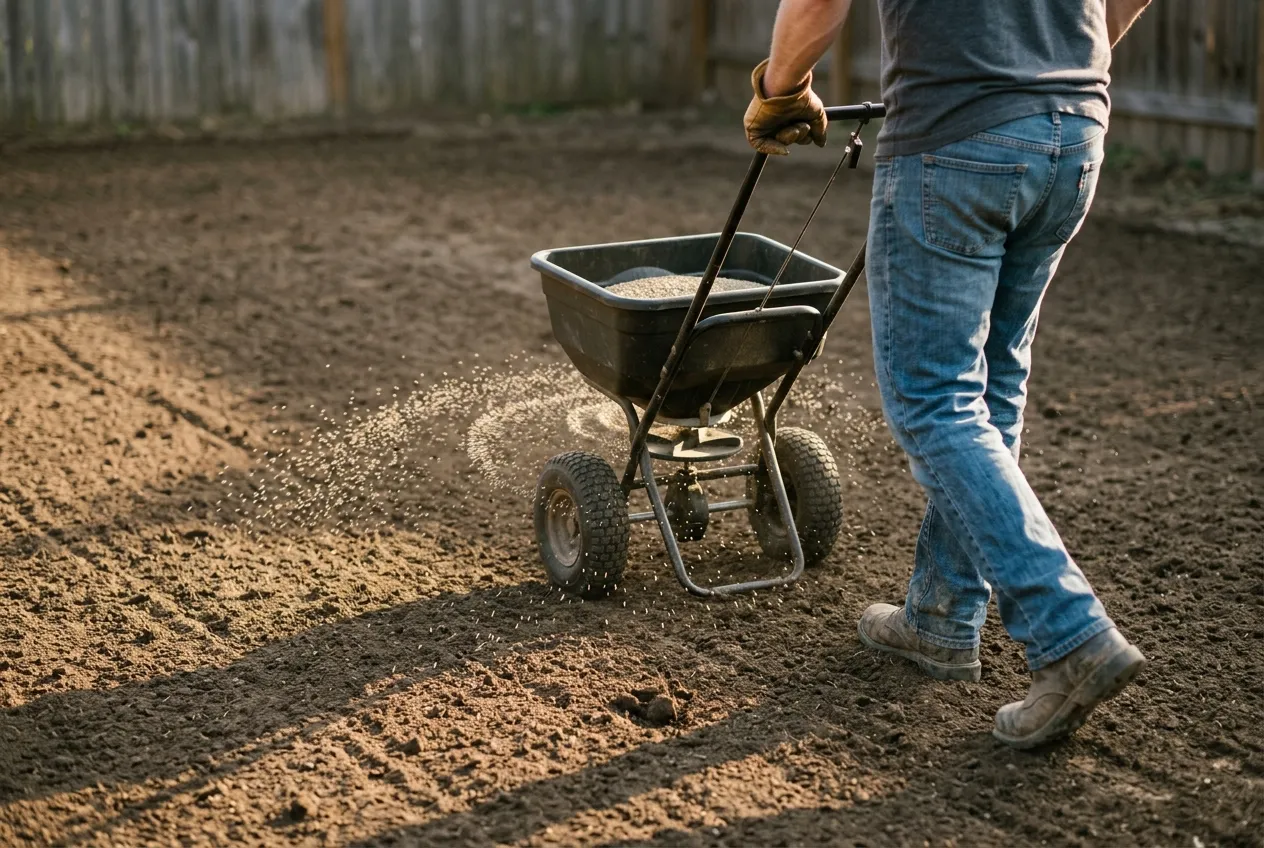
- One heavy pass with the spreader. A single pass strips or doubles the rate in bands. Spread half the seed walking one direction and half perpendicular for even coverage.
- Letting the seedbed dry out. The top quarter inch must stay moist through the whole germination window — five to thirty days. Two dry afternoons can undo the whole job; light daily watering beats one deep soak.
Frequently Asked Questions
References
- UMass Extension, Seeding Rate Considerations for Home Lawns — species mix percentages and standard lbs per 1,000 sq ft rates, umass.edu
- Columbia Seeds, Turfgrass Seeding Rate Chart — seeds-per-pound data and per-acre rates by species, columbiaseeds.com
- Cornell University, Sports Field Management: Seeding Rates — species-specific rates and purity standards, cornell.edu
Disclaimer: The grass seed calculator results on this page are planning estimates. Seeding rates vary by cultivar, seed coating, blend composition and regional extension guidance — always confirm the rate printed on your seed bag, and time planting to your local climate for best establishment.
Lawn sized and seed counted? Get quotes from local landscaping and lawn care pros near you.
Get Free Estimates