
Enter Project Details
Results update live as you type. Mixed units welcome.
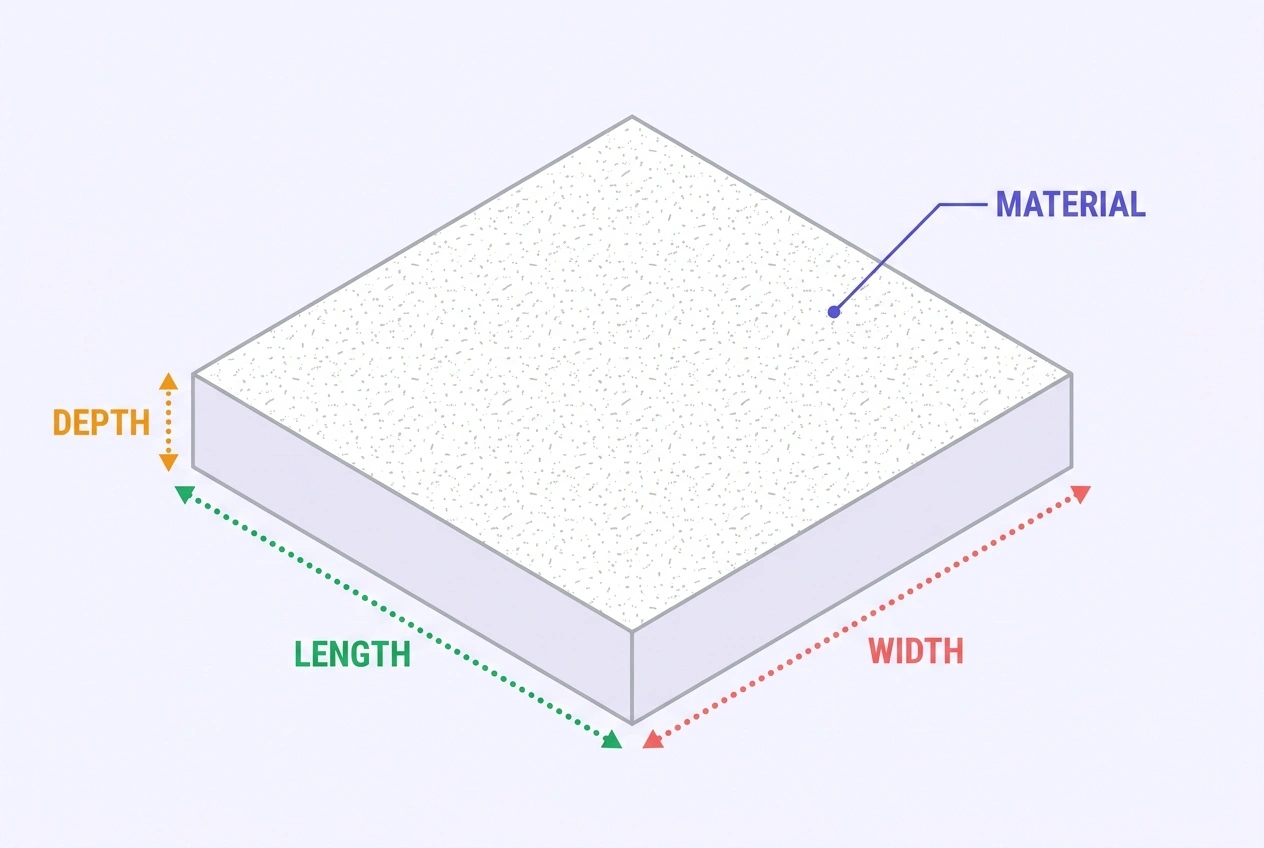 30 feet
20 feet
4 inches
Fill dirt
Results
Volume
Weight
Delivery & Materials
Calculation Assumptions
What You Get
- ✓Free — no sign-up, nothing to install
- ✓Live results as you type
- ✓Cubic yards and tons from area × depth
- ✓Material dropdown with real loose densities
- ✓Settling allowance preset by material
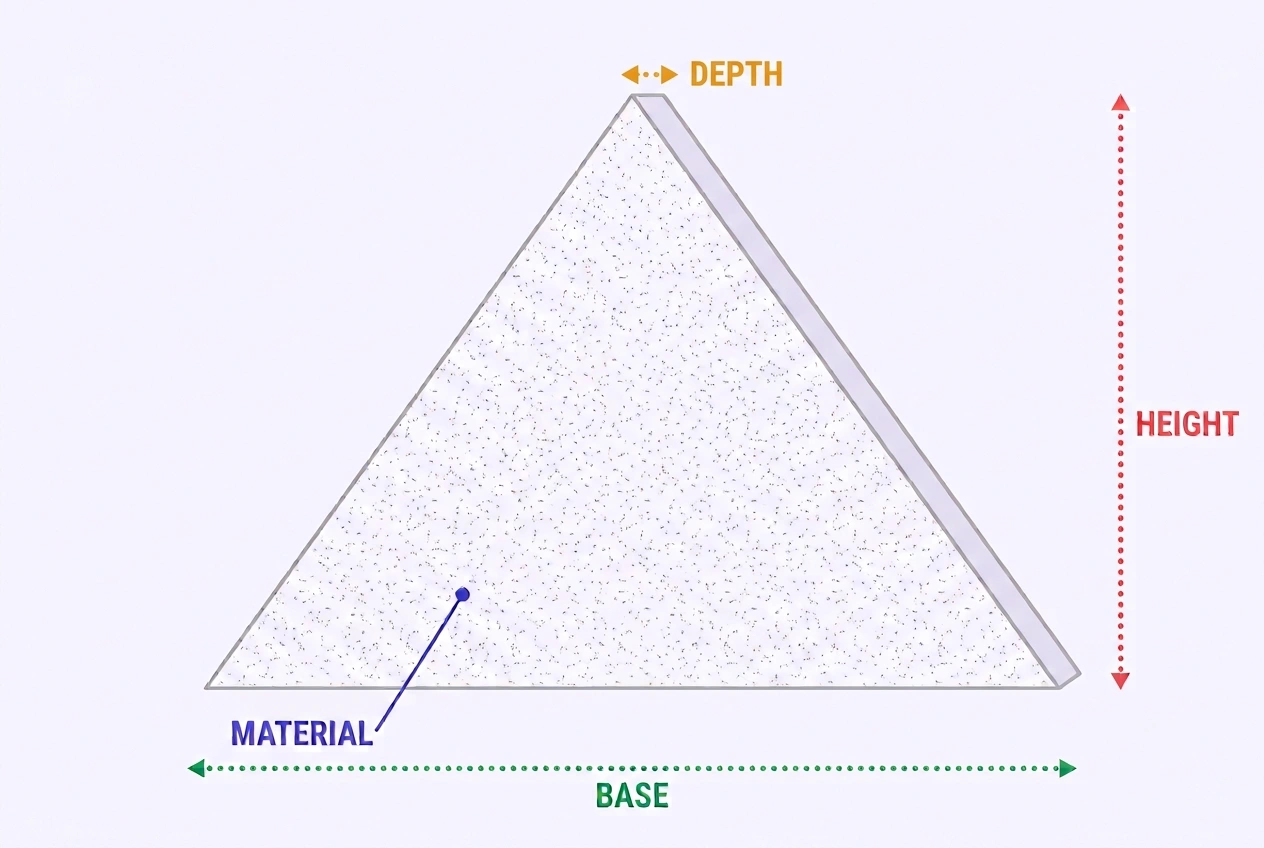
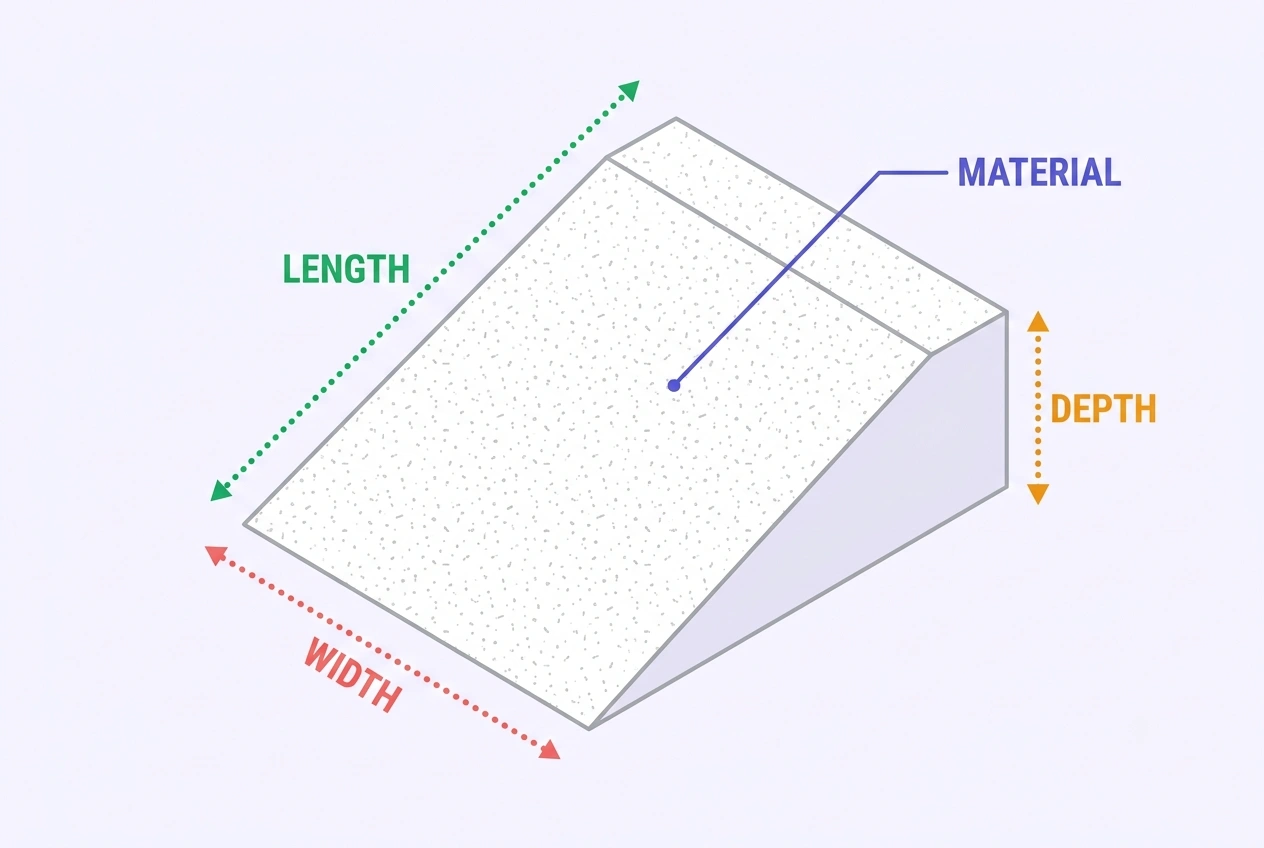
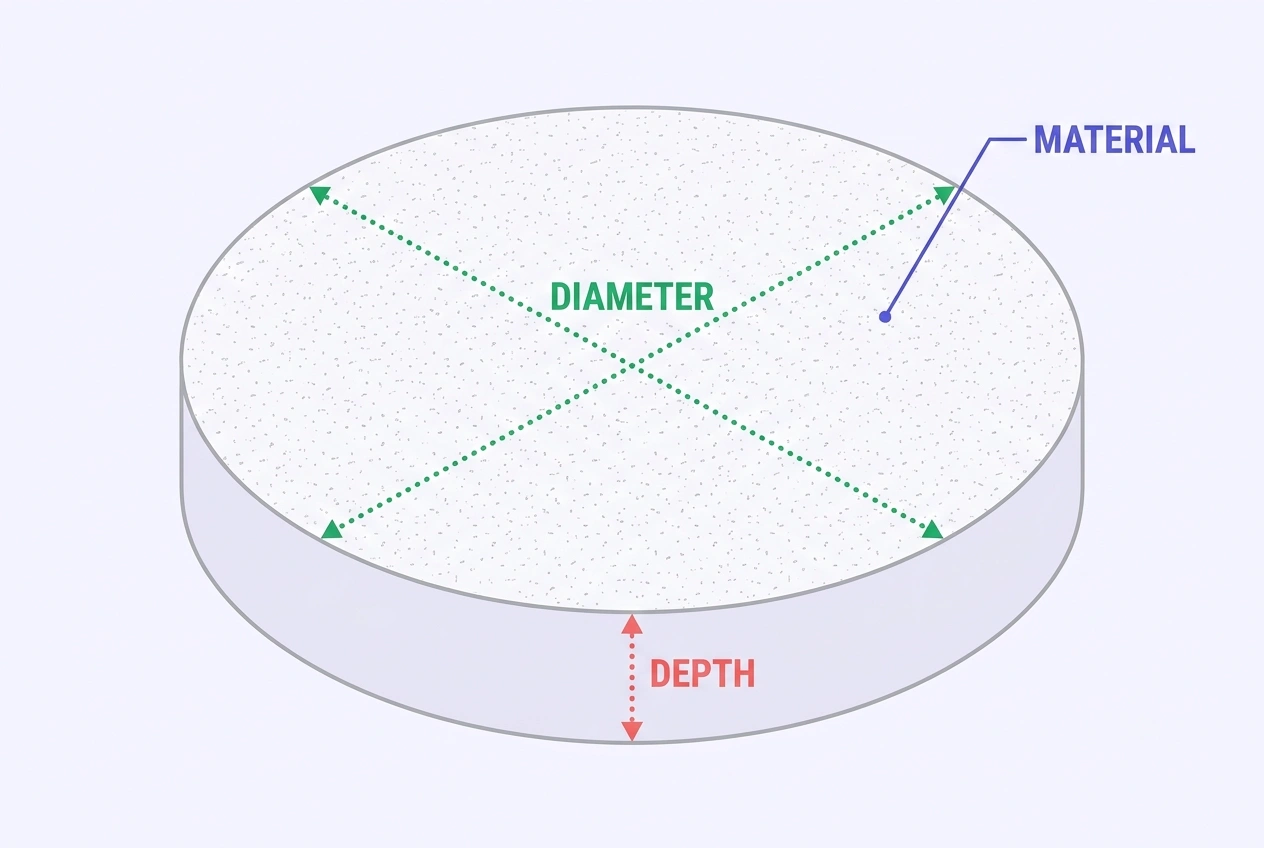
- ✓Rectangle, circle, triangle, slope wedge & custom areas
- ✓Loose delivered vs in-place volume, side by side
- ✓Truckloads by volume with truck-size selector
- ✓Weight-per-load payload check
- ✓Bag count with bag-size selector
- ✓Depth solver: yards on hand → covered depth
- ✓Cost per yd³ or per ton + delivery fee
- ✓Export a PDF takeoff in one click
- ✓Shareable link that saves your inputs
- ✓Works on phone, tablet & desktop
ON THIS PAGE:
How the Fill Dirt Math Works
Dirt is ordered loose but lives in the ground compacted, and every good estimate bridges that gap in three steps: area times average depth gives the finished volume, a settling allowance inflates it to the loose delivered volume, and the material's density converts that to tons. The calculator runs it like this:
finished (yd³) = area (ft²) × depth (ft) ÷ 27
loose order = finished × (1 + settling%)
tons = loose order × density (t/yd³)
The number you hand the supplier is the loose order, not the finished volume. Dirt arrives fluffed from the pit, then shrinks as it takes on water, traffic, and tamping — a truckload that looks generous on day one can finish an inch short of grade in a month. Ordering the finished figure is the single most common way to end up 15% short.
Depth should be the average finished depth for uneven areas — measure at the deepest point, the shallowest, and a midpoint, then average. For a slope where one end sits at grade and the other needs the full depth, use the slope wedge mode, which applies the triangular cross-section automatically instead of over-ordering by double.
Fill Dirt Materials & Densities
“Fill dirt” is a category, not a product. What is actually in the truck decides both the weight conversion and how much the fill settles, so pick the row that matches your source — and when a structural spec applies, the geotechnical report wins over any table:
| Material | Density (t/yd³) | Typical Settling | Best For |
|---|---|---|---|
| Fill dirt (loam subsoil) | 1.25 | 15% | General leveling, low spots, grade changes |
| Sandy / granular fill | 1.35 | 10–12% | Drainage-prone areas, under pads; settles least |
| Clay-heavy fill | 1.40 | 20–25% | Pond cores, bulk raising — swells when wet, keep away from foundations |
| Structural fill (spec) | 1.50 | 15–20% | Compacted lifts to a Proctor spec under slabs and drives |
| Screened topsoil | 1.10 | 10–15% | Finish layer for planting — never structural |
| Topsoil, moist / unscreened | 1.30 | 15% | Rough grading where some organics are acceptable |
| Sandy loam | 1.20 | 12% | Lawn topdressing and blending |
| Compost / garden blend | 0.80 | 10% | Amendment and bed building — lightest per yard |
Densities are loose delivery values for US short tons; moisture pushes them 15–25% higher, which matters most for truck payload, not for the yardage you order. Suppliers sell by the cubic yard far more often than by the ton — if yours weighs loads, use the ton price mode in the calculator instead of converting their figure.
Settling & Compaction: Why Delivered Beats Finished
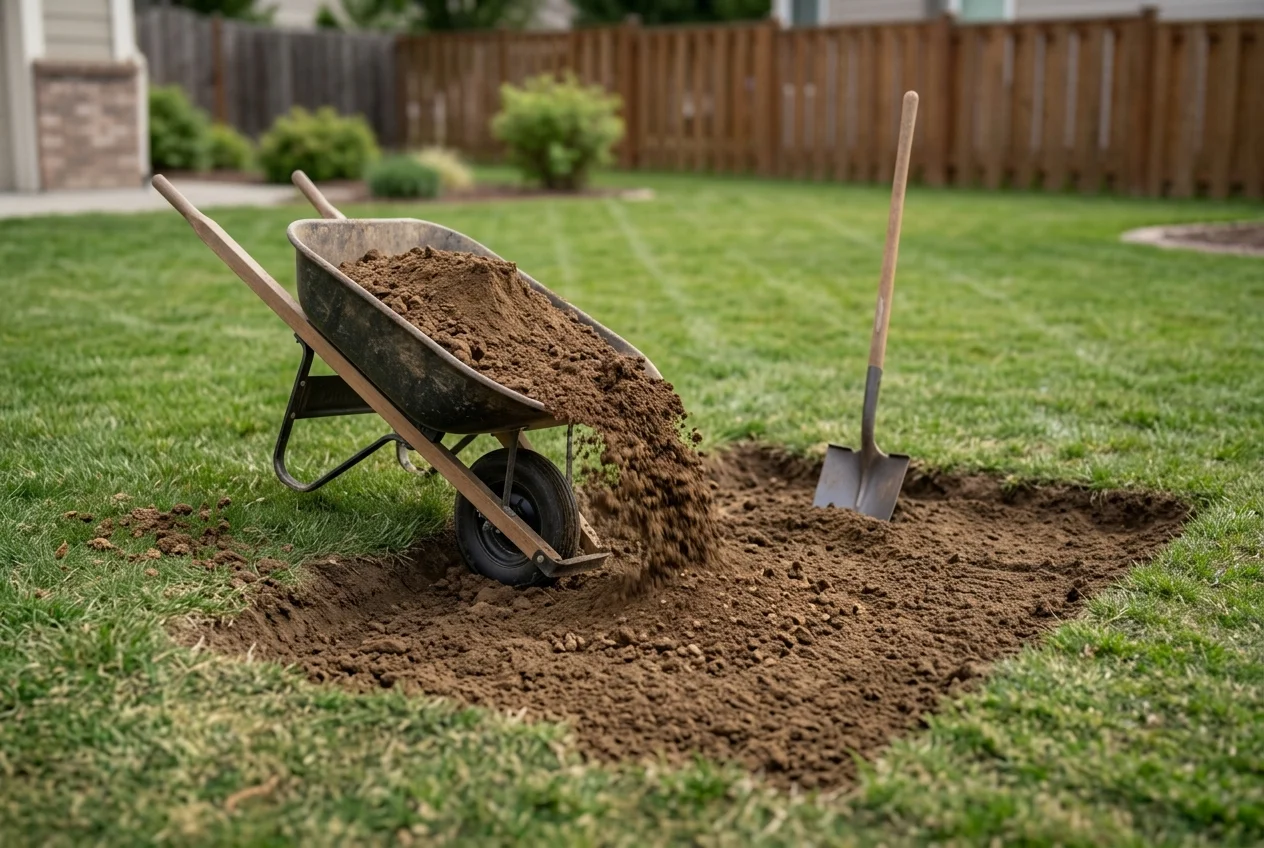
Soil occupies more volume loose in a truck than it ever will in the ground. The gap comes from three mechanisms acting at once: fines and air voids collapsing under their own weight (self-settling), water percolating through and letting particles reposition (hydroconsolidation), and mechanical work — foot traffic, mowing, or a plate compactor — driving the mass tighter (compaction). A settling allowance is not padding; it is the arithmetic that makes the trucks that show up actually fill the hole.
How much to add depends on the material and what happens to it after spreading. Loose landscaping fill that only gets raked and rained on needs 10–15%. Fill compacted in lifts to a specification typically consumes 15–20% of its loose volume, and clay-heavy material — whose platey particles repackage dramatically — can run to 25%. The calculator presets the allowance when you pick a material and lets you override it for your own spec; a project with a written 95% Proctor requirement should always use the project's own conversion, not a generic number.
One practical rule ties it together: place deep fills in 4–6 inch lifts, compacting each before the next. A single 12-inch dump that is only tamped from the top stays loose at the bottom and settles for years — the allowance can fix the quantity, but only the lifting discipline fixes the result.
Trucks, Payload & Coverage
With dirt, the bed usually fills up before the truck runs out of legal payload — the opposite of stone, where weight binds first. That is why the calculator sizes deliveries by volume: it divides your loose order by the truck's heaped capacity and rounds up, because nobody delivers four-tenths of a load:
| Truck | Capacity (yd³) | Typical load of fill dirt |
|---|---|---|
| Single-axle dump | 10 | ≈ 12.5 tons |
| Tandem axle | 12–14 | ≈ 15–17.5 tons |
| Tri-axle | 16 | ≈ 20 tons |
The results card also shows the weight per load using your material's density. That number is the sanity check for the exception case: wet clay weighs so much that a full volume load can exceed a legal payload, and a supplier will short the volume to stay road-legal — which is fine, as long as the total order accounts for it. Coverage works the other direction: one loose yard spread at 4 inches finishes about 81 ft², at 2 inches about 162 ft², before the settling allowance does its work.
For small jobs, bagged topsoil and fill come in 0.75 ft³ (40 lb) bags — 36 per cubic yard. The crossover lands near one yard: a 2-yard order is 72-plus bags at many times the bulk price, which is why the results card flags bulk delivery once the bag count gets serious.
Slopes & Wedge Fills
A sloped fill — a swale being softened, a grade transition along a foundation, the down-slope side of a pad — has a triangular cross-section: zero depth at the top edge, maximum depth at the bottom. Filling that shape with the flat-area formula at the maximum depth over-orders by exactly double, because the true volume is the average of the two depths times the area:
wedge (yd³) = L × W × maxDepth ÷ 2 ÷ 27
Select Slope Wedge in the shape row and enter the length along the slope, the width, and the maximum depth at the low end; the halving is built in. The mode pairs naturally with the settling allowance from the material dropdown, so a wedge that computes 22.2 yd³ of finished fill in clay-heavy soil orders around 27 yd³ loose — and the truck math follows as usual.
Two slope cautions the formula cannot see: fills steeper than about 3:1 (horizontal:vertical) need erosion control or terracing regardless of how much dirt they take, and any fill placed near a property line can redirect water onto a neighbor — most municipalities regulate grade changes at the lot line, so check before the trucks roll.
Worked Example
Take the calculator's defaults: a 30 × 20 ft low spot, 4 inches deep on average, filled with loam fill dirt at 1.25 t/yd³ and a 15% settling allowance:
| Step | Calculation | Result |
|---|---|---|
| Area | 30 × 20 | 600 ft² |
| Depth in feet | 4 ÷ 12 | 0.333 ft |
| In-place (finished) volume | 600 × 0.333 ÷ 27 | 7.41 yd³ |
| With 15% settling | 7.41 × 1.15 | 8.52 yd³ loose (230 ft³) |
| Weight | 8.52 × 1.25 t/yd³ | 10.6 tons |
| Truck loads | 8.52 ÷ 10 yd³ truck | 1 load (12.5 t payload) |
| Coverage check | 324 ÷ 4 in | 81 ft² per loose yard |
| Bag equivalent | 230 ÷ 0.75 | 307 bags — bulk wins |
| Cost at $20/yd³ | 8.52 × $20 | $170.37 |
The reverse check: one loose yard covers 81 ft² at 4 inches, and 600 ft² ÷ 81 = 7.4 yards of finished fill — matching the volume math exactly. The 15% settling allowance is what turns 7.41 into the 8.52 you actually order; without it, the fill finishes closer to 3.4 inches than 4 after its first wet season.
Cost & Ordering
Fill dirt is the cheapest bulk material on most sites — and the one where freight is nearly the whole price. Typical 2026 US ranges:
| Material | Per yd³ | Per Ton | Notes |
|---|---|---|---|
| Unscreened fill dirt | $5–$25 | $4–$20 | Cheapest; inspect for debris before accepting |
| Screened fill | $12–$35 | $10–$28 | Rocks and roots removed; good near foundations |
| Structural / spec fill | $15–$35 | $12–$28 | Gradation documented; for compacted lifts |
| Sandy fill | $12–$28 | $9–$22 | Drains well; premium where scarce |
| Screened topsoil | $20–$60 | $18–$55 | Finish layer only, not fill |
Delivery runs $50–$150 per load within a practical radius, and distance moves the total more than the material choice does — fill is heavy, so haul cost dominates. Season matters too: spring grading season pushes prices up, while late summer and fall are often cheaper. Orders under about 5 yards can carry a short-load fee; above 20 yards, per-yard pricing usually negotiates.
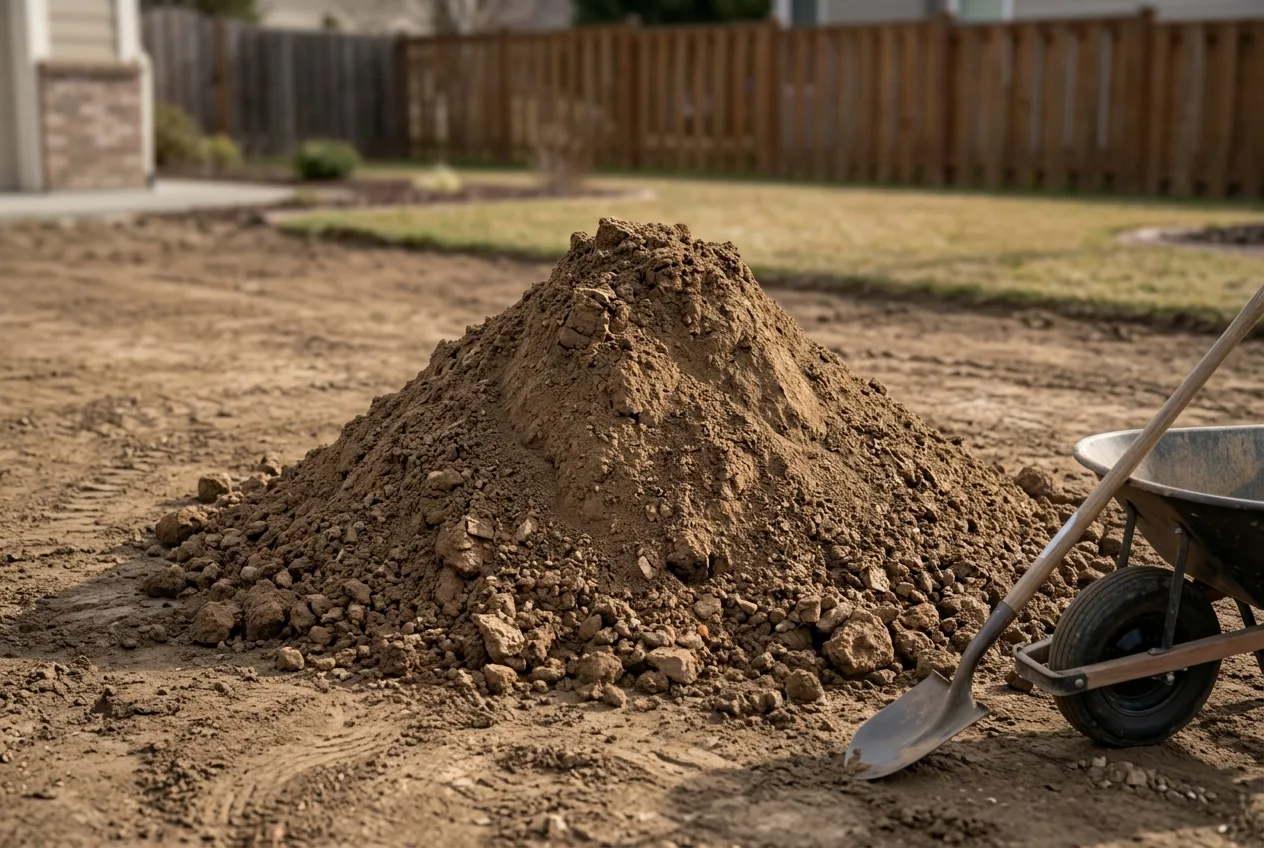
Two habits protect the budget. First, ask what is actually in the truck: “clean fill” means no debris, asphalt, or organics, and free fill from an excavation is only a bargain if it is genuinely clean — buried wood and construction waste settle into voids that cost more to fix than the dirt saved. Second, compare quotes in one unit: the price-mode toggle in the calculator converts your single estimate between per-yard and per-ton so supplier quotes line up.
Fill Dirt vs Topsoil: Two Layers, Two Jobs
The costliest mix-up in this category is structural: using topsoil where fill belongs, or planting into fill. The two materials look similar in a truck and behave nothing alike in the ground:
| Property | Fill Dirt | Topsoil |
|---|---|---|
| Organic matter | Minimal to none | High — that is its job |
| Behavior under load | Compacts into a stable mass | Stays loose, keeps settling for years |
| Supports structures | Yes — pads, backfill, grade-up | No — decomposes and shrinks |
| Grows plants | No — no nutrients or biology | Yes — the growing layer |
| Where it goes | The bulk of any grade change | The last 4–6 inches, on top |
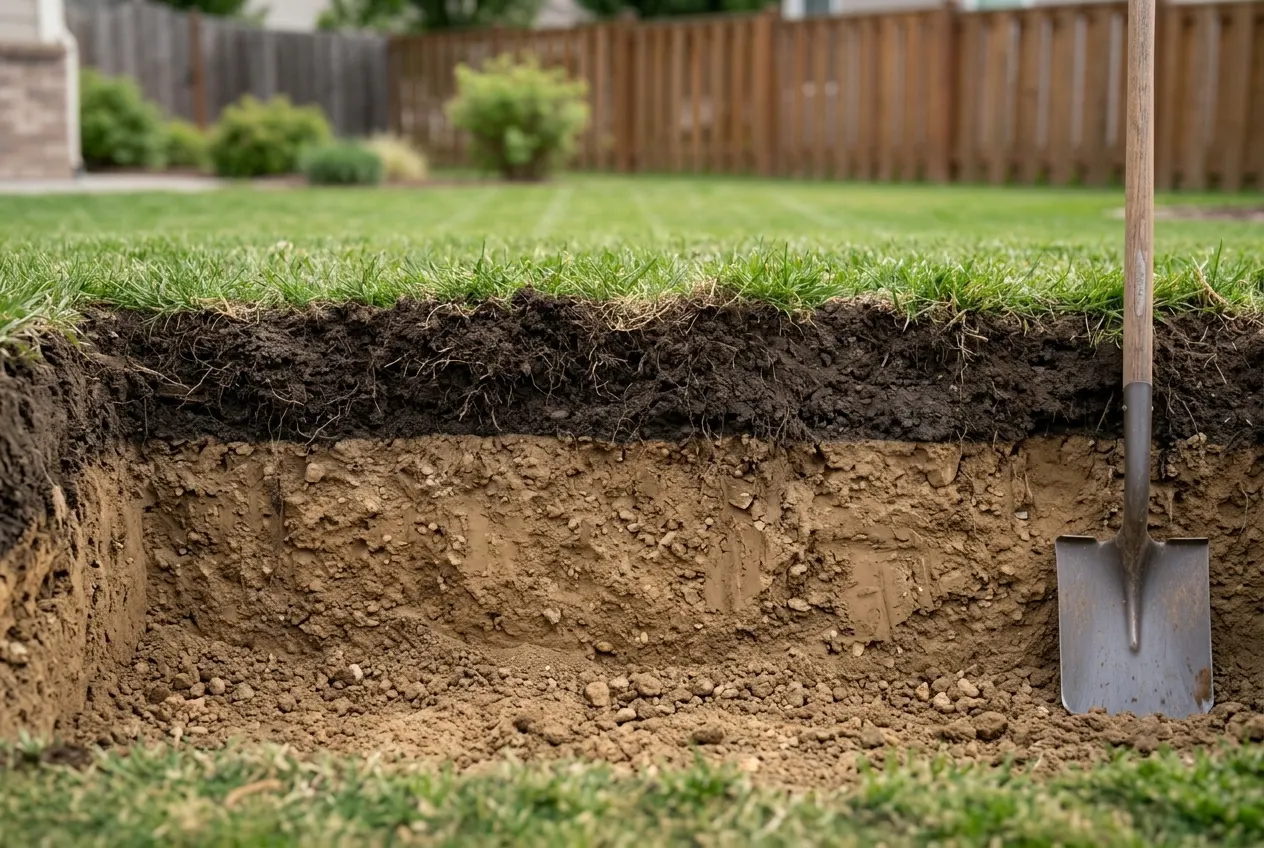
Most real projects use both, in that order: fill dirt builds the bulk of the grade, then a topsoil cap makes it plantable. Size the two quantities separately — this calculator for the fill, and the same area × depth math at 4–6 inches for the cap — because combining them into one deep topsoil order buries expensive organic matter where it does nothing but settle.
Frequently Asked Questions
Multiply the area by the average depth and divide by 27. A 30 × 20 ft low spot at 4 inches deep is 600 × 0.333 ÷ 27 = 7.41 cubic yards of finished fill. Loose dirt settles as it takes on water and weight, so add a settling allowance — about 15% for ordinary fill — and order roughly 8.5 yards.
Roughly 1.1 to 1.4 US short tons depending on material and moisture. Typical loam fill runs about 1.25 t/yd³, sandy granular fill about 1.35, clay-heavy fill up to 1.4, and screened topsoil near 1.1. Wet dirt can run 15–25% heavier than the dry figure.
Plan 10–15% extra for loose landscaping fill and topsoil, and 15–25% when the fill will be mechanically compacted in lifts or must reach a spec density. Clay-heavy fill settles the most; sandy granular fill the least. The allowance is added on top of the finished volume so the trucks that arrive actually fill the hole.
A standard single-axle dump carries about 10 cubic yards, a tandem axle 12–14, and a tri-axle 15–16. With dirt, volume usually fills the bed before weight becomes the limit — but wet clay is the exception, so check the estimated weight per load before scheduling.
Fill dirt is subsoil with little or no organic matter, so it compacts into a stable mass and holds grade. Topsoil is the organic surface layer plants grow in, and it keeps settling as that organic matter breaks down — the wrong material for structural fill. Most jobs build the bulk with fill dirt and finish with 4–6 inches of topsoil.
Not directly. Fill dirt has no organic matter or nutrients, so seed struggles even if it sprouts. Build the grade with fill dirt, then cap it with 4–6 inches of topsoil before seeding or sodding — and plan that cap as a separate quantity from the start.
Unscreened fill typically runs $5–$25 per cubic yard at the source, screened fill $12–$35, with delivery adding $50–$150 per load in most markets. Distance dominates the price — fill is heavy and freight is most of the delivered cost. Clean fill is sometimes free from local excavation projects if you haul it yourself.
Clean fill is dirt with no construction debris, asphalt, concrete chunks, trash, or organic material. Organics and buried wood decompose and leave voids that settle, so inspect any free or cheaply sourced fill before accepting it — ask where it came from, and reject loads with visible debris or woody material.
References
- ASTM D698, “Standard Test Methods for Laboratory Compaction Characteristics of Soil Using Standard Effort” — the Proctor density basis for compacted fill specs, astm.org
- ASTM D2487, “Standard Practice for Classification of Soils for Engineering Purposes (Unified Soil Classification System)” — soil group definitions behind fill classifications, astm.org
- USDA Natural Resources Conservation Service, “Web Soil Survey” — soil types, textures, and engineering properties by location, nrcs.usda.gov
- ICC International Residential Code, Section R401.3 “Drainage” — finished-grade slope requirements away from foundations, codes.iccsafe.org
Disclaimer: The fill dirt calculator results on this page are planning estimates only. Actual delivered volume and weight vary with moisture, source material, and handling (±15% is common), and settling depends on placement method and soil type. Confirm density and price with your supplier, and use project-specific compaction data where a specification applies.
Grade built and ready for the next layer? Size the crushed stone base or the concrete pad that goes on top — and get quotes from local fill dirt suppliers near you.
Get Free Estimates