
Volume Calculator
Pick a shape, enter dimensions in any unit, and read volume in six units at once — cubic feet, cubic inches, cubic yards, cubic meters, liters, and US gallons.

Results
Volume
Cost Estimate
Calculation Assumptions
What You Get
- ✓Free — no sign-up, nothing to install
- ✓Five shapes — box, cylinder, triangular prism, sphere, area × depth
- ✓Mixed units on every field — feet, inches, cm, meters, yards
- ✓Six simultaneous outputs: cu ft, cu in, cu yd, m³, liters, US gallons
- ✓Diameter or radius input on round shapes
- ✓Optional price per cubic foot, yard, meter, or liter
- ✓Live results as you type
- ✓Export a PDF of the calculation in one click
- ✓Shareable link that saves your inputs
- ✓Works on phone, tablet & desktop
ON THIS PAGE:
Volume on the Job
Volume is the amount of three-dimensional space something fills or a container holds, and on a job site it decides what you order: concrete by the cubic yard, mulch by the yard or bag, water by the gallon, backfill by the truckload. Length answers "how far," area answers "how much surface," and volume answers "how much stuff" — the third multiplication that turns a footprint and a thickness into a delivery.
The trade convention is to keep three formats in your head at once. Orders are placed in cubic yards because that is how ready-mix and landscape supply price; the tape reads feet and inches; tank and pond work ends in gallons. A slab 12 by 10 feet and 4 inches thick is 40 cubic feet, 1.48 cubic yards, and if you poured it as a tank it would hold about 299 gallons — one set of dimensions, three languages. This calculator speaks all of them side by side so the number you order matches the number you measured.
One habit saves more material than any formula: decide before you measure whether you want capacity or displacement. A refrigerator's rated cubic footage is its cabinet interior, not the box it ships in; a planter holds soil by its inside faces; the hole you dug displaces by its outside faces. Interior measurements answer "how much fits," exterior measurements answer "how much room it takes" — and mixing the two is how planters come up one bag short.
The Five Formulas
Every result on this page comes from one of five formulas. Keep every dimension in the same unit before multiplying — the calculator does the conversions when you mix units, but by hand that step is where errors live.
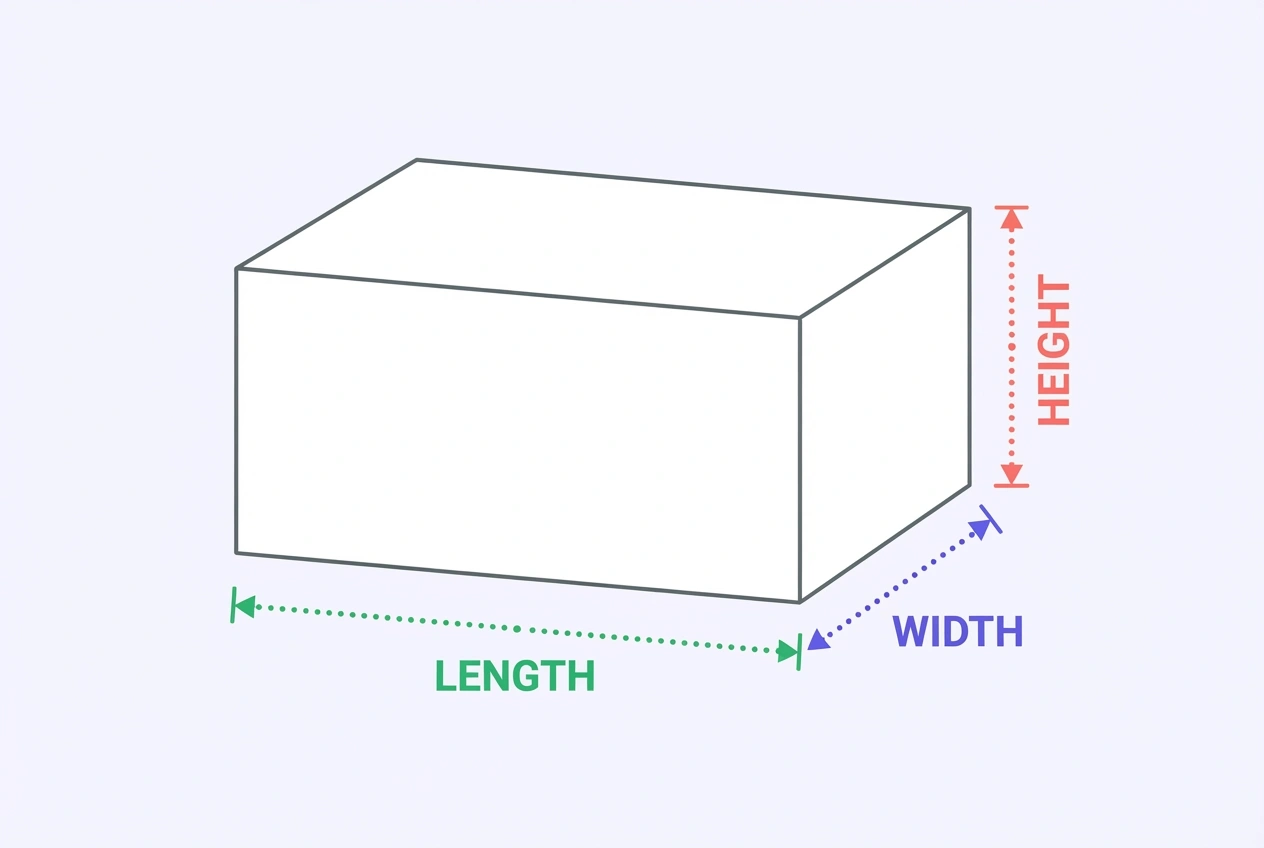
- Box (rectangular solid)
V = L × W × H. The workhorse: slabs, footings, beds, tanks, planters, holes. Any prism with a rectangular face follows the same rule, which is why "length times width times height" covers most of construction.
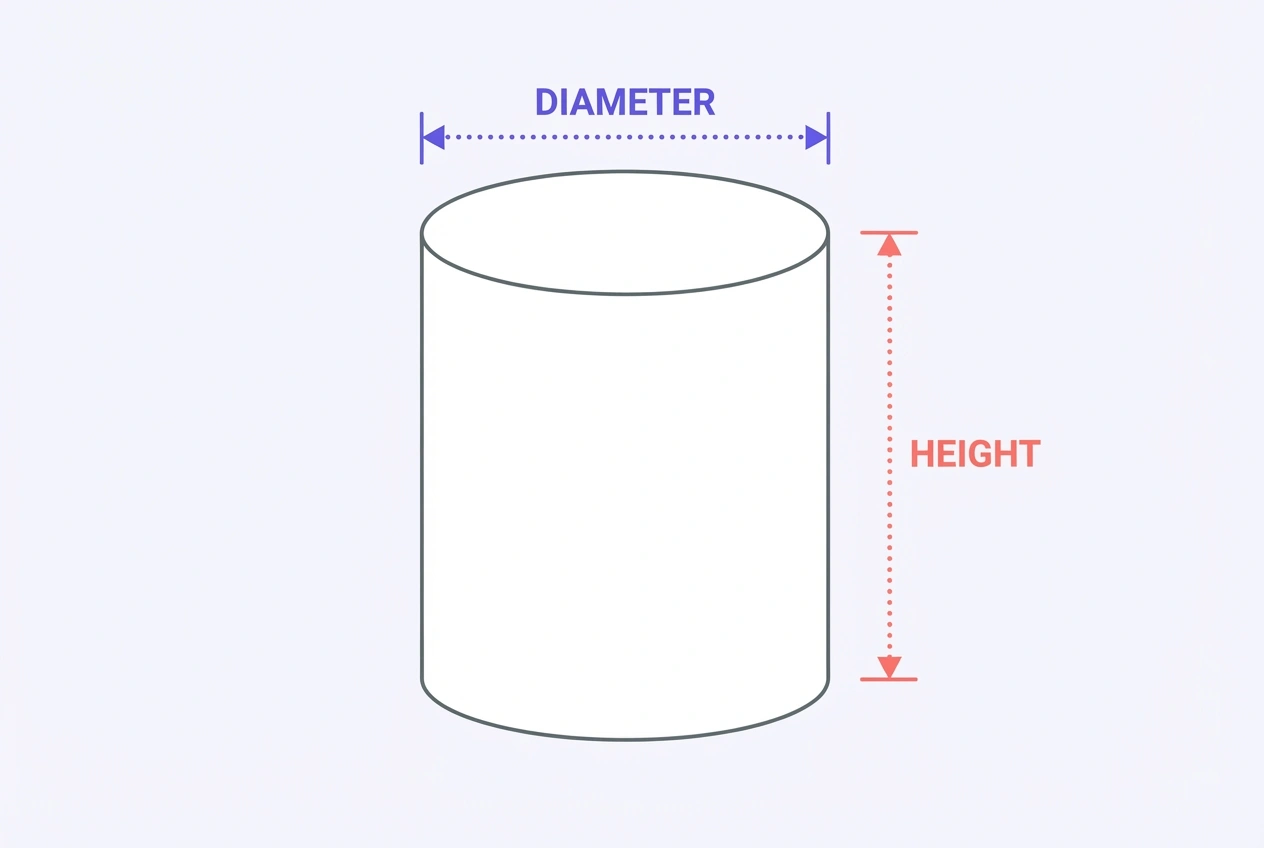
- Cylinder
V = πr²h — the circular base area times height. Measured as diameter d, that's V = π(d/2)²h. Piers, round footings, columns, silos, water tanks, pipes.
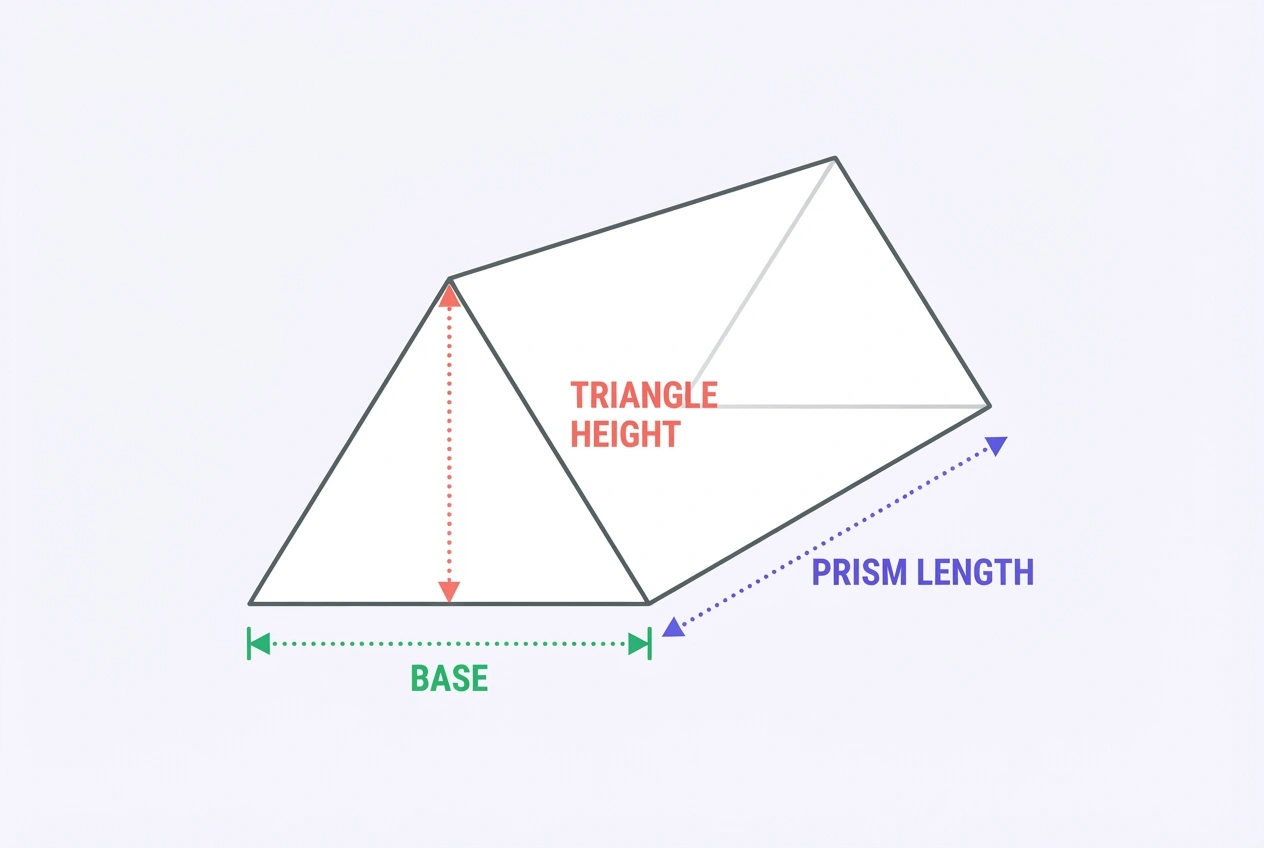
- Triangular prism
V = ½ × base × triangle height × prism length. The triangle is the cross-section, the length is how far it runs. Gable ends, ramp sides, chamfered curb sections, A-frame footings.
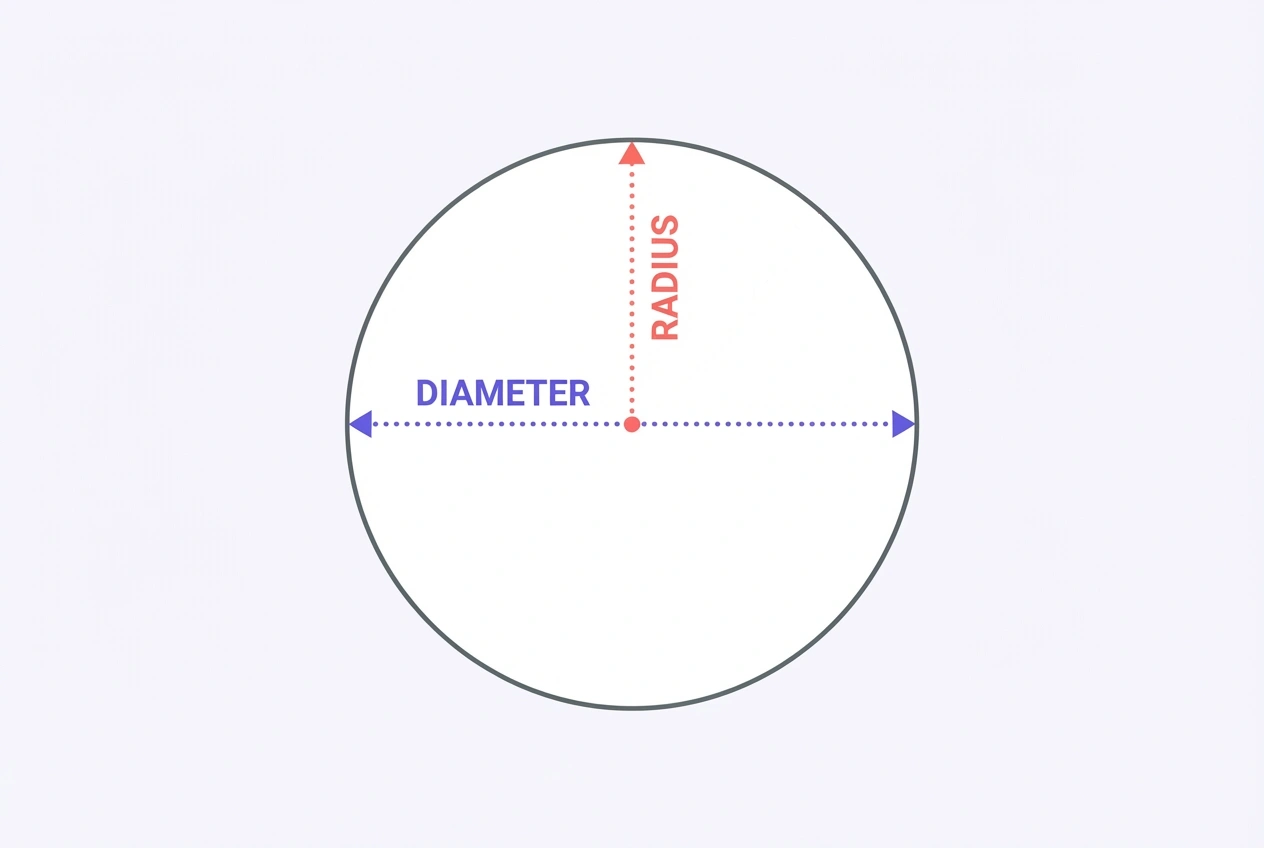
- Sphere
V = (4/3)πr³, or with diameter: V = πd³/6. Tank heads, floats, domed planters, ballast. Note the cube — small diameter changes move volume fast.
- Area × depth
V = A × h, with area in square feet and depth in feet. The shortcut when you already know the footprint from a plan or the Square Footage Calculator — mulch beds, gravel paths, slab pours. Six inches of depth is 0.5 feet, not 6.
Worked Example: The Page Defaults
The calculator opens on a box 4 feet long, 3 feet wide, 2 feet high — the numbers pre-filled in the form. Walking the math by hand:
V = 4 × 3 × 2 = 24 cubic feet. Everything else converts from that figure: 24 × 1,728 = 41,472 cubic inches; 24 ÷ 27 = 0.889 cubic yards; 24 × 0.0283168 = 0.68 cubic meters; × 28.3168 = 679.6 liters; × 7.48052 = 179.5 US gallons.
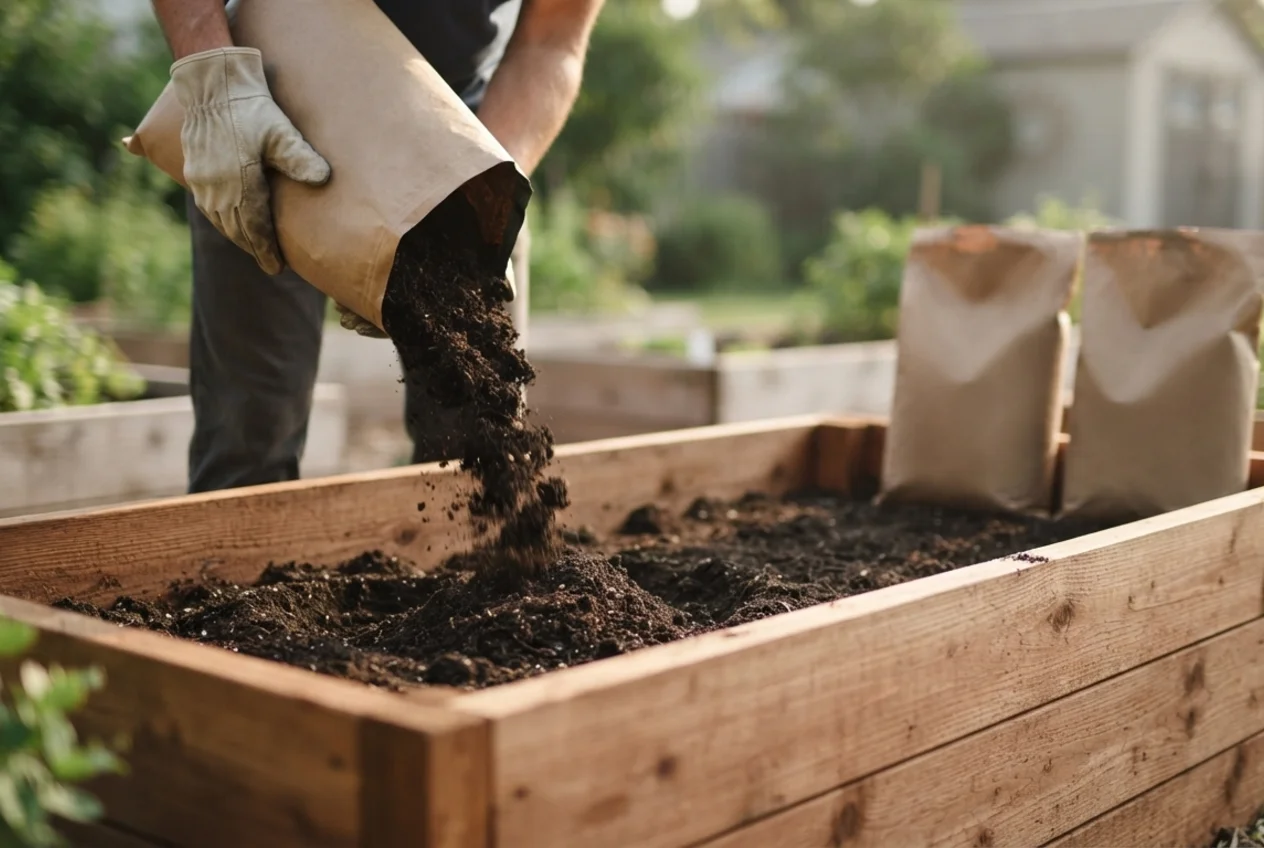
Suppose the same box is a planter and soil runs $1.85 per cubic foot: 24 × 1.85 = $44.40 to fill. If the supplier prices by the yard instead, switch the basis — $1.85 per cubic foot is the same rate as $49.95 per cubic yard, and 0.889 cu yd × $49.95/yd works out to the same $44.40.
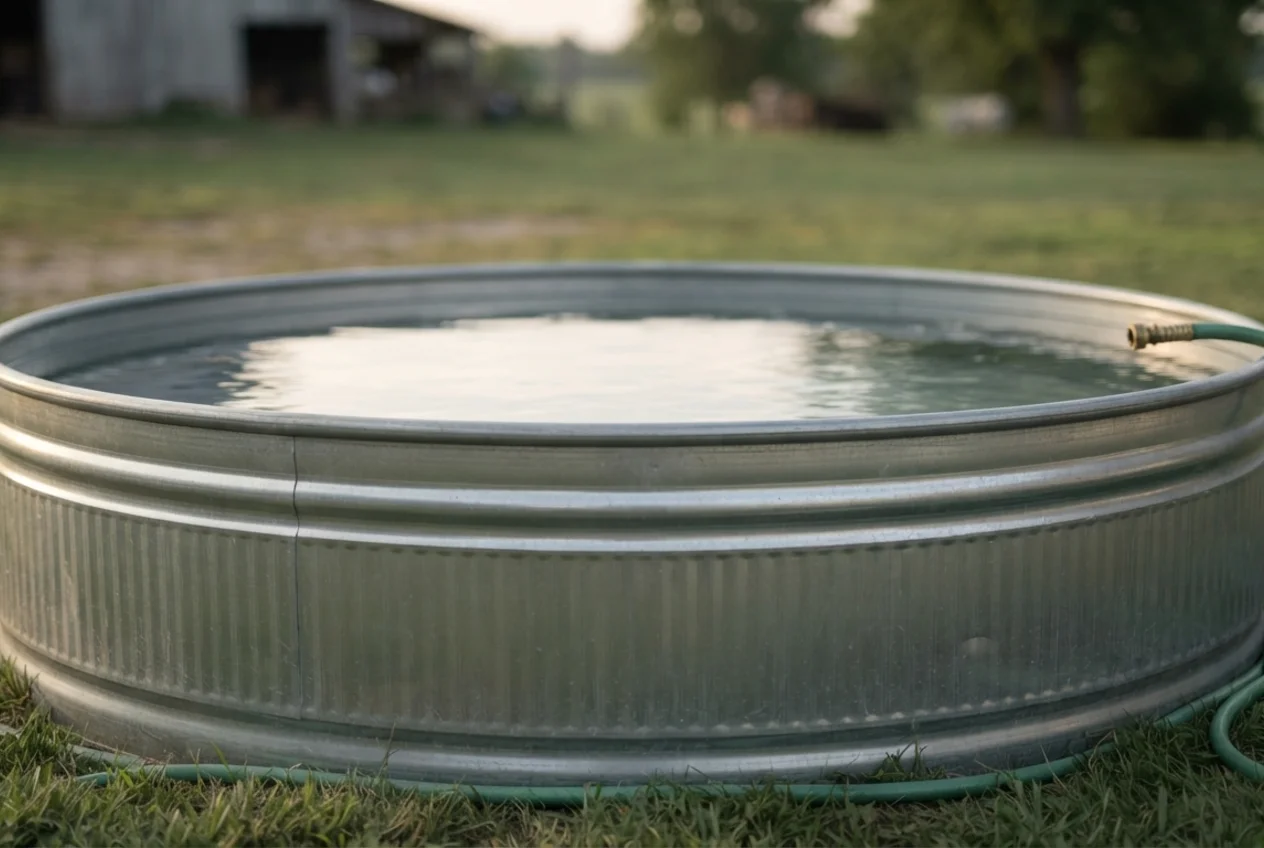
Now the cylinder case: a stock tank 24 inches in diameter, 34 inches tall. Diameter mode saves the halving step: r = 1 ft, h = 2.8333 ft, so V = π × 1 × 2.8333 = 8.90 ft³ — 66.6 US gallons, the number the feed store asks for.
Volume Unit Conversions
Convert any result by multiplying with a row below — or just read all six outputs at once in the results card.
| From → To | Cubic Inches | Cubic Feet | Cubic Yards | Cubic Meters | Liters | US Gallons |
|---|---|---|---|---|---|---|
| 1 cubic inch | 1 | 0.000579 | 0.0000214 | 0.0000164 | 0.0164 | 0.004329 |
| 1 cubic foot | 1,728 | 1 | 0.037037 | 0.028317 | 28.317 | 7.48052 |
| 1 cubic yard | 46,656 | 27 | 1 | 0.764555 | 764.55 | 201.97 |
| 1 cubic meter | 61,024 | 35.315 | 1.30795 | 1 | 1,000 | 264.17 |
| 1 liter | 61.024 | 0.035315 | 0.001308 | 0.001 | 1 | 0.26417 |
| 1 US gallon | 231 | 0.13368 | 0.004951 | 0.003785 | 3.7854 | 1 |
What a Cubic Yard Covers
Landscape and concrete orders arrive in cubic yards, so the last step of most estimates is coverage: how far one yard spreads at your depth. The pattern is 27 cubic feet ÷ depth in feet.
| Depth | Depth in Feet | Square Feet per Cubic Yard |
|---|---|---|
| 1 inch | 0.0833 | 324 sq ft |
| 2 inches | 0.1667 | 162 sq ft |
| 3 inches | 0.25 | 108 sq ft |
| 4 inches | 0.3333 | 81 sq ft |
| 6 inches | 0.5 | 54 sq ft |
| 12 inches | 1.0 | 27 sq ft |
Reading it the other way: a 10 × 20 bed mulched 3 inches deep needs 200 × 0.25 = 50 cu ft = 1.85 cu yd — order 2 yards. For material-specific takeoffs with weight, bag counts, and order-rounding rules, the Cubic Yards Calculator carries the estimate further.

Frequently Asked Questions
Multiply length by width by height: V = L × W × H. A box 4 feet by 3 feet by 2 feet holds 24 cubic feet. Enter each dimension with its own unit — the calculator converts everything to feet internally before multiplying, so a 48-inch by 3-foot by 24-inch box works without any manual conversion.
Exactly 27 — three feet per side, cubed. Divide cubic feet by 27 for yards. A slab 12 by 10 feet and 4 inches thick is 40 cubic feet, which is 40 ÷ 27 = 1.48 cubic yards of concrete.
Divide by 1,728, because a cubic foot is 12 × 12 × 12 cubic inches. Appliance and shipping dimensions usually arrive in inches — the cubic inches row and the cubic feet row appear together in the results, so no separate conversion step is needed.
About 7.48 US gallons — one gallon is 231 cubic inches and a cubic foot is 1,728, and 1,728 ÷ 231 = 7.48052. The gallons row turns any shape on this page into tank or pond capacity directly.
Inside for capacity — how much a fridge, tank, or planter holds. Outside for displacement — the space an object occupies, which is what shipping and storage footprints care about. Rated appliance capacities are cabinet interiors, so measure the same way before comparing.
Multiply the area by the depth, with the depth in feet. Choose Area × Depth, enter the area in square feet, and enter depth in inches — the calculator converts 6 inches to 0.5 feet for you. Fifty square feet at six inches is 25 cubic feet.
V = πr²h in cubic feet, times 7.48 for gallons. Enter the diameter directly — the calculator halves it for you — or enter the radius: a 24-inch diameter tank 34 inches tall works out to 8.90 cubic feet, about 66.6 gallons.
At three inches deep, one yard covers 108 square feet; at two inches, 162; at one inch, 324. The coverage table above lists every common depth — divide your square footage by the row that matches your spread depth to get yards to order.
References
- National Institute of Standards and Technology, NIST Special Publication 330 — The International System of Units (SI), nist.gov
- National Bureau of Standards, Refinement of Values for the Yard and the Pound, 1959, nist.gov
- National Institute of Standards and Technology, NIST Handbook 44 — Specifications, Tolerances, and Other Technical Requirements for Weighing and Measuring Devices, nist.gov
This calculator provides estimates for planning purposes only. Verify quantities, coverage, and pricing with your supplier before ordering. MyBuilderBase is not responsible for ordering errors, material shortfalls, or job costs resulting from use of this tool.
Ordering concrete, mulch, or a tank fill? Compare quotes from local suppliers and get real delivered prices before you commit the pour.
Get Free Estimates