
ON THIS PAGE:
Quick Comparison Table
Material-only ranges are the right way to start a comparison, because labor varies more by region than by product. Once a material survives the shortlist, add installation to the number.
| Material | Material cost | Water | DIY | Lifespan | Best for | Avoid in |
|---|---|---|---|---|---|---|
| Laminate | $1–$3 / sq ft | No — swells | Easy | 15–25 yr | Dry living areas and bedrooms on a budget | Baths, laundry, basements |
| LVP (vinyl plank) | $2–$5 / sq ft | Yes — SPC or WPC core | Easy | 15–25 yr | Kitchens, entries, basements, rentals | Sun-baked rooms without blinds |
| Solid hardwood | $5–$12 / sq ft | No — moves with humidity | Hard | 50+ yr | Living rooms, resale value, refinishing | Full baths, humid crawlspaces |
| Tile (ceramic/porcelain) | $1–$5 / sq ft | Yes — waterproof | Moderate to hard | 50+ yr | Baths, kitchens, mudrooms, high traffic | Bedrooms, cold rooms without heat |
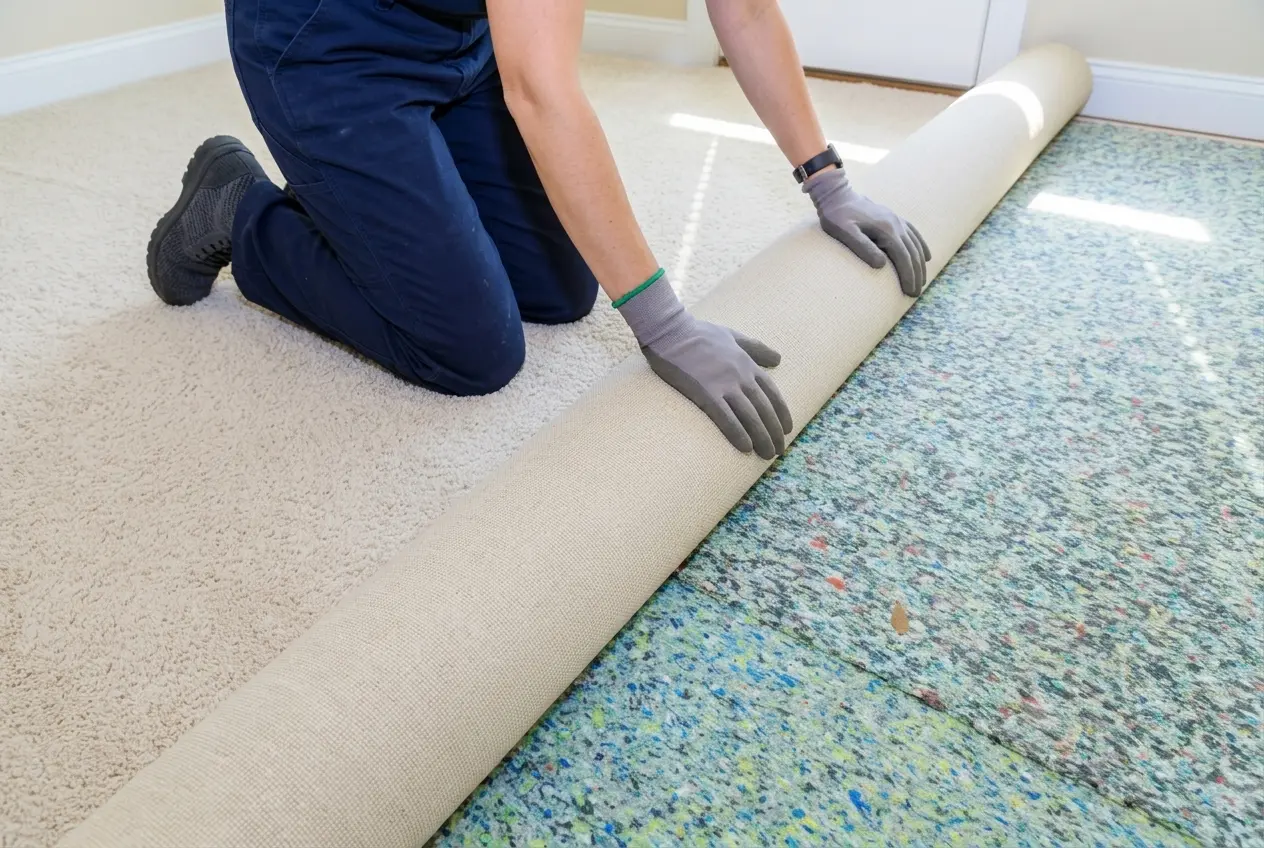
| Carpet | $1–$4 / sq ft | No — absorbs | Hard | 8–15 yr | Bedrooms, stairs, sound control | Baths, kitchens, entries |
Those are typical 2026 U.S. material ranges. Installed cost roughly doubles the number for floating floors and multiplies it further for tile and nail-down wood. The installed vs material cost guide explains the split, and the Flooring Calculator converts your room dimensions into boxes and material cost.
Choosing by Room Type
Room use decides more than product preference. A material that is perfect in a bedroom can fail in six months next to a shower.
| Room | First choice | Budget choice | Why |
|---|---|---|---|
| Living / family room | Engineered or solid hardwood, wide-plank LVP | Laminate | Large visual area; resale value; tolerates dry conditions |
| Bedrooms | Carpet | Laminate or LVP | Comfort and sound; low moisture; light traffic |
| Kitchen | Porcelain tile, SPC vinyl plank | Sheet vinyl | Spills, dropped items, chair traffic, frequent mopping |
| Bathroom | Porcelain or ceramic tile | Waterproof SPC vinyl | Standing water, humidity, toilet and tub details |
| Basement | Waterproof LVP over a moisture-tested slab | Luxury vinyl tile | Slab moisture and the risk of a future leak |
| Hallway and stairs | Hardwood, LVP, or carpet on stairs | Laminate | Concentrated traffic; stairs need a product that holds a nosing |
| Mudroom / entry | Tile or luxury vinyl tile | Sheet vinyl | Wet shoes, grit, and salt |
Open-plan houses complicate this: a kitchen, dining area, and living room that share one sightline usually want one continuous floor. In that case, pick the material that satisfies the wettest part of the space, then use the same product throughout. Continuous SPC vinyl through a kitchen and living area is a common solution; continuous hardwood is beautiful but asks more of the kitchen habits.
Choosing by Budget
Budget conversations go wrong when they compare material price per square foot and stop there. The number that matters is installed cost per square foot, including prep and trim.
| Band | What it buys | Realistic installed range | Trade-off |
|---|---|---|---|
| Under $2 / sq ft material | Builder-grade carpet, sheet vinyl, clearance laminate | $3–$6 installed | Short lifespan; limited patterns; hidden prep still costs |
| $2–$4 / sq ft | Mid-grade laminate, SPC vinyl plank, ceramic tile, better carpet | $6–$10 installed | The value sweet spot for most homes |
| $4–$7 / sq ft | Premium SPC, porcelain tile, engineered hardwood | $9–$16 installed | Better wear layers and tighter joints; heavier material |
| $7+ / sq ft | Solid hardwood, natural stone, wide-plank engineered | $14–$30 installed | Refinishable and high resale, but humidity-sensitive |
Three budget rules save more money than product shopping:
- Spend on the subfloor first. A flat, dry, sound substrate makes an inexpensive floor look expensive and keeps a costly one from failing.
- Standardize the product. One SKU across several rooms reaches quantity pricing and leaves fewer transition strips.
- Do the demolition yourself. Tear-out and haul-away are labor-heavy and low-skill. Leave leveling, tile, and stair work to trades.
Choosing by Moisture Exposure
Water is the single best predictor of flooring failure, and it arrives from four directions: spills from above, humidity in the air, moisture through a slab, and leaks from plumbing or weather.
| Exposure | Examples | Safe choices | Risky choices |
|---|---|---|---|
| Dry | Bedrooms, living rooms, dining rooms, upper floors | Everything, including hardwood and carpet | None, provided indoor humidity stays moderate |
| Occasional wet | Kitchens, entries, laundry, mudrooms | Tile, SPC vinyl, sheet vinyl | Laminate, carpet, unfinished hardwood |
| Frequently wet | Full baths, showers, pet areas | Porcelain tile with membrane, waterproof SPC | Carpet, laminate, engineered wood |
| Below grade | Basements, slab-on-grade rooms | Waterproof LVP or tile over a tested slab | Solid hardwood, laminate, carpet directly on concrete |
Two tests belong before any below-grade or slab purchase: a plastic-sheet moisture test on the concrete, and a humidity reading of the space. If the slab emits moisture, a vapor barrier or an appropriate underlayment is not optional. The underlayment guide covers which membrane suits which product.
Choosing by DIY Skill
Every product can be installed by a homeowner. The question is how much of the job is unforgiving. Floating floors forgive small errors; tile and carpet do not.
- Beginner-friendly: click-lock laminate and LVP. Cuts are straight, joints self-align, and a mistake is a replaceable plank rather than a ruined room. Plan for a flat subfloor and a 1/4-inch expansion gap at every wall.
- Moderate: glue-down vinyl plank and tile on a small floor. Adhesive open time and thinset consistency matter, and lippage shows under raking light.
- Advanced: nail-down hardwood and stretch-in carpet. Hardwood needs a nailer, a moisture-aware acclimation period, and confidence with a floor stapler; carpet needs a power stretcher, seaming tools, and tack strip work.
A practical compromise is common: install the floating floor yourself and hire out tile and stairs. That captures most of the savings without risking the two jobs where errors are expensive to undo.
Worked Example: Three Rooms, Three Answers
A 1,600-square-foot single-story house needs three floors: a 12×12 bedroom, a 16×20 living room, and a 5×8 bathroom. The budget is mid-range, the subfloor is plywood in good condition, and the homeowner wants to do the bedroom themselves.
- Bedroom — carpet, 144 sq ft. Carpet at $3.00 per sq ft plus pad at $0.65 and installation at $2.25 gives about $5.90 per sq ft, or $850. Add 10 percent material waste for cuts.
- Living room — SPC vinyl plank, 320 sq ft. Plank at $3.50 plus $2.50 installation is $6.00 per sq ft, or $1,920. The same product continues into the hall for a clean transition.
- Bathroom — porcelain tile, 40 sq ft. Tile at $4.00 is $160, backer board and membrane about $100, installation at $9.00 per sq ft is $360, and a toilet pull-and-reset adds $200: roughly $820, or about $20 per sq ft.
- Project total: about $3,590 for 504 square feet, or $7.12 per square foot across the three rooms.
The bathroom is 8 percent of the floor area and 23 percent of the cost. That ratio is normal, and it is the reason a per-square-foot average for a whole house is misleading. Price each room, then add the transitions, shoe mold, and any door undercutting the new thickness requires.
Installation Differences
The installation method determines the subfloor requirements, the acclimation time, and how hard the floor is to repair later.
| Method | Products | Subfloor requirement | Repair |
|---|---|---|---|
| Floating click | Laminate, LVP, some engineered wood | Flat within about 3/16 in over 10 ft, clean and dry | Replace a plank from the nearest wall |
| Glue-down | Vinyl plank and tile, engineered wood | Smooth, sound, moisture-tested; patch all voids | Harder; adhesive removal is slow |
| Nail or staple | Solid and engineered hardwood | Wood subfloor, correct fastener length, acclimated stock | Sand and refinish the whole floor |
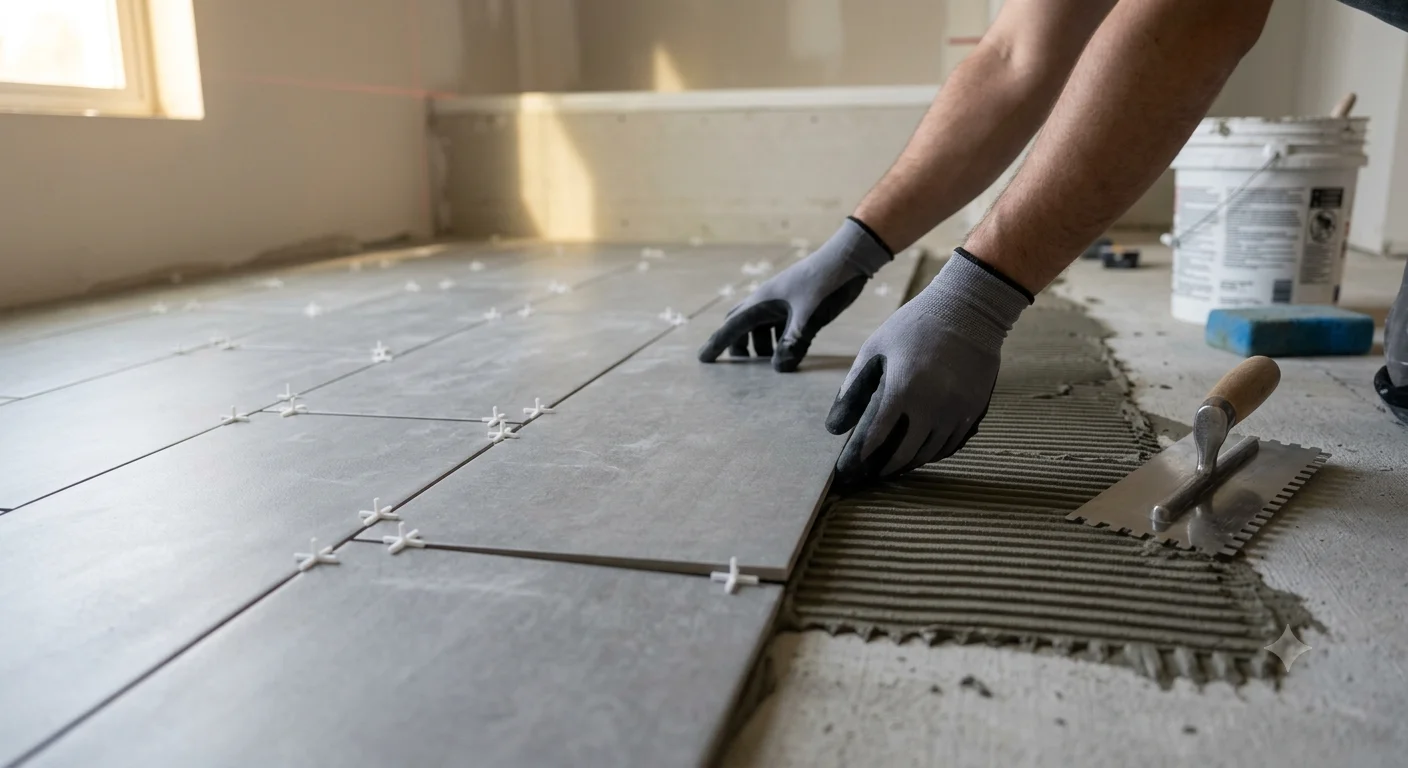
| Thin-set | Ceramic and porcelain tile, stone | Deflection L/360 (L/720 stone), membrane or backer board | Replace individual tiles; keep spares |
| Stretch-in | Wall-to-wall carpet | Tack strip, pad, flat and clean deck | Patch or re-stretch a section |
Acclimation is the step homeowners skip. Laminate and LVP need 48 hours in the room at normal temperature; hardwood needs days to weeks depending on species and packaging, with moisture content matched to the local equilibrium. Tile and carpet do not acclimate, but their substrates must be at the right moisture level before installation.
Maintenance and Repair
Maintenance cost rarely appears in a comparison table, yet over 20 years it can exceed the material difference between two products.
| Material | Routine care | Periodic work | Typical repair |
|---|---|---|---|
| Laminate | Dry mop, damp mop with a laminate cleaner | None | Swap damaged planks; avoid wet mopping |
| LVP | Sweep, damp mop, no wax | None | Replace a plank; keep spares from the same run |
| Hardwood | Dust mop, occasional hardwood cleaner | Refinish every 7–12 years in traffic areas | Sand and recoat; replace boards for deep damage |
| Tile | Sweep, damp mop, pH-neutral cleaner | Reseal cementitious grout every 1–3 years | Replace a tile; regrout worn joints |
| Carpet | Vacuum weekly, spot clean promptly | Professional deep clean every 12–18 months | Patch or re-stretch; replace in high traffic |
Humidity control matters more than any cleaner. Solid wood wants indoor relative humidity around 35–55 percent year-round; a house that swings from 20 to 70 percent will show gaps in winter and cupping in summer no matter how carefully the floor was finished. A cheap hygrometer and a dehumidifier are part of the flooring budget.
Five Selection Mistakes
- Choosing by photo. A showroom sample under warm light looks nothing like 400 square feet under a window. Ask for a full-box loan and view it in the actual room at different times of day.
- Ignoring the subfloor. Every product family assumes a flat, dry substrate. Leveling compound, patching, and moisture mitigation are part of the project, not extras.
- Putting carpet in a wet room. Carpet in a bathroom or laundry room is a mold experiment. Water reaches the pad and never dries.
- Mixing too many products. Four floors in four rooms break the visual flow and multiply transition strips, thresholds, and leftover material.
- Buying the exact quantity. Dye lots and production runs change. Order the calculated quantity plus waste in one purchase and store the spare box indoors.
Frequently Asked Questions
References
- National Wood Flooring Association, Consumer Guidelines for Wood Flooring — species, moisture, and installation requirements, nwfa.org
- Tile Council of North America, TCNA Handbook for Ceramic, Glass, and Stone Tile Installation — substrate, membrane, and movement-joint requirements, tcnatile.com
- North American Laminate Flooring Association, Installation and Care Guidelines — acclimation, expansion gaps, and moisture limits, nalfa.com
- Carpet and Rug Institute, Seal of Approval and Maintenance Guidelines — carpet performance ratings and cleaning intervals, carpet-rug.org
- U.S. Bureau of Labor Statistics, Occupational Employment and Wage Statistics — flooring installer wages by state and metro area, bls.gov/oes
- Building Science Corporation, Basements and Crawlspaces: Moisture Control — slab moisture, vapor retarders, and below-grade assemblies, buildingscience.com
- U.S. Environmental Protection Agency, Indoor Air Quality: Flooring — emissions, ventilation during installation, and material selection, epa.gov
Disclaimer: This guide compares common residential flooring materials for general planning. It is not an installation specification, engineering opinion, or warranty. Product performance varies by manufacturer, grade, subfloor condition, climate, and installation quality, and local building codes may impose additional requirements in wet areas and on stairs. Confirm selection, acclimation, and substrate preparation with the product instructions and a qualified installer before purchasing.