
Enter Roof Dimensions
Fill in the roof details. Results update live as you type.
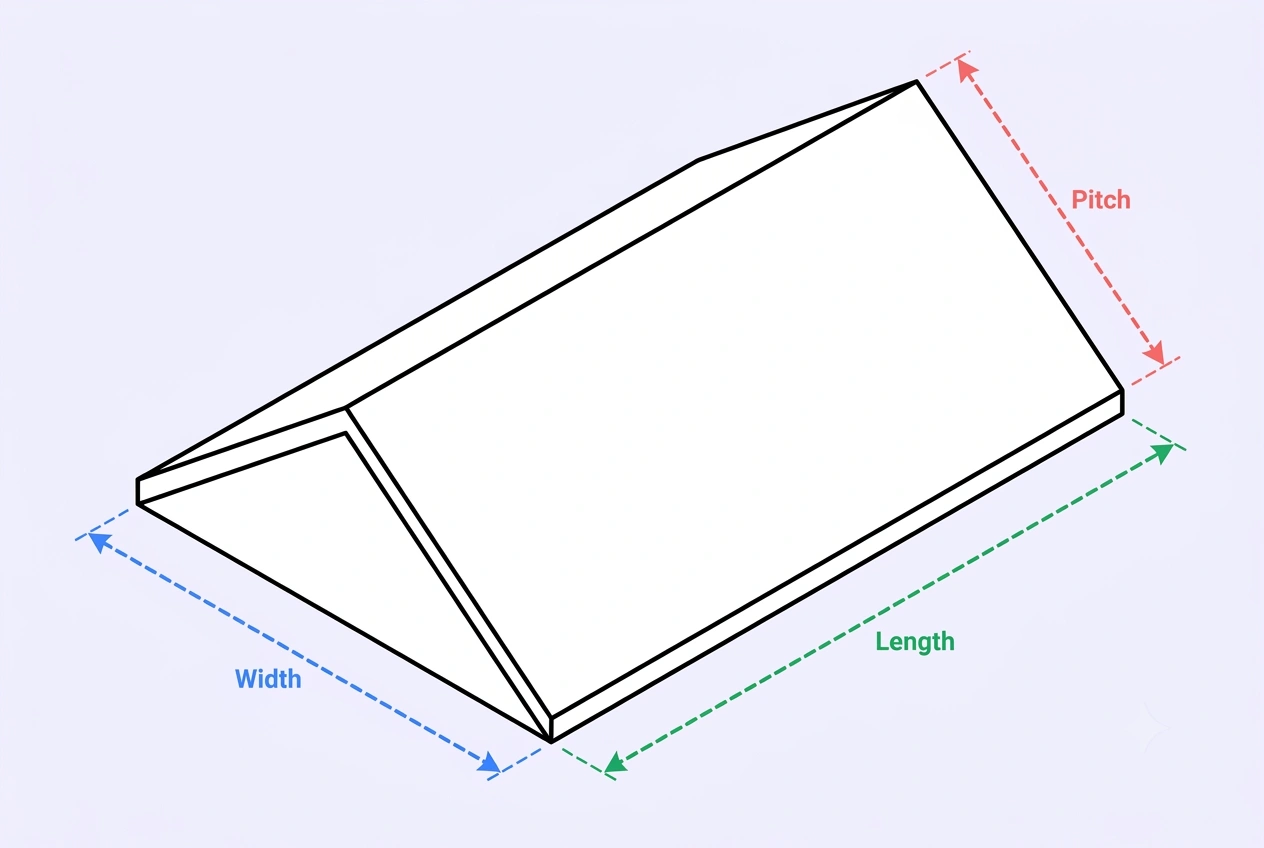 40 feet
30 feet
6:12
Results
Roof Area
Materials Needed
Cost Estimate
Calculation Assumptions
What You Get
- ✓Free — no sign-up, nothing to install
- ✓Live results as you type
- ✓Feet, inches, cm, meters & yards — mix any units
- ✓Export a PDF takeoff in one click
- ✓Shareable link that saves your inputs
- ✓Works on phone, tablet & desktop
- ✓Gable, hip & shed roof shapes
- ✓Pitch and overhang included
- ✓Squares with waste allowance
ON THIS PAGE:
How Much Does a Roof Replacement Cost?
It will cost anywhere between $6,000 to $9,000 to replace a typical 1,700 square foot asphalt shingle roof. Roofing companies charge an average of $3.50 to $6.00 per square foot for asphalt roof replacements.
There are several factors that influence how much it will cost to replace your roof:
- Roofing material — Asphalt shingles are the most affordable, while metal, tile, and slate cost significantly more
- Roof size — Larger roofs require more materials and labor
- Roof pitch — Steeper roofs are more difficult and dangerous to install
- Roof complexity — Valleys, dormers, and hips add time and cost
- Location — Labor costs vary by region
- Labor costs — Priced per roofing square (default $200); varies by region, tear-off, and roof complexity
Use our calculator above to estimate the cost for your specific roof. Simply enter your roof dimensions, pitch, and select your preferred material to get an instant estimate.
What Is Roofing Measurement?
Roofing measurement is the process of determining the total surface area of a roof to estimate the materials needed for installation or replacement. Accurate measurements are critical for ordering the right amount of shingles, underlayment, and other roofing materials.
Unlike measuring a floor, roof measurements must account for the slope (pitch) of the roof. A steeper roof has more surface area than the flat footprint beneath it. The roof pitch multiplier converts the horizontal footprint into the actual sloped surface area.
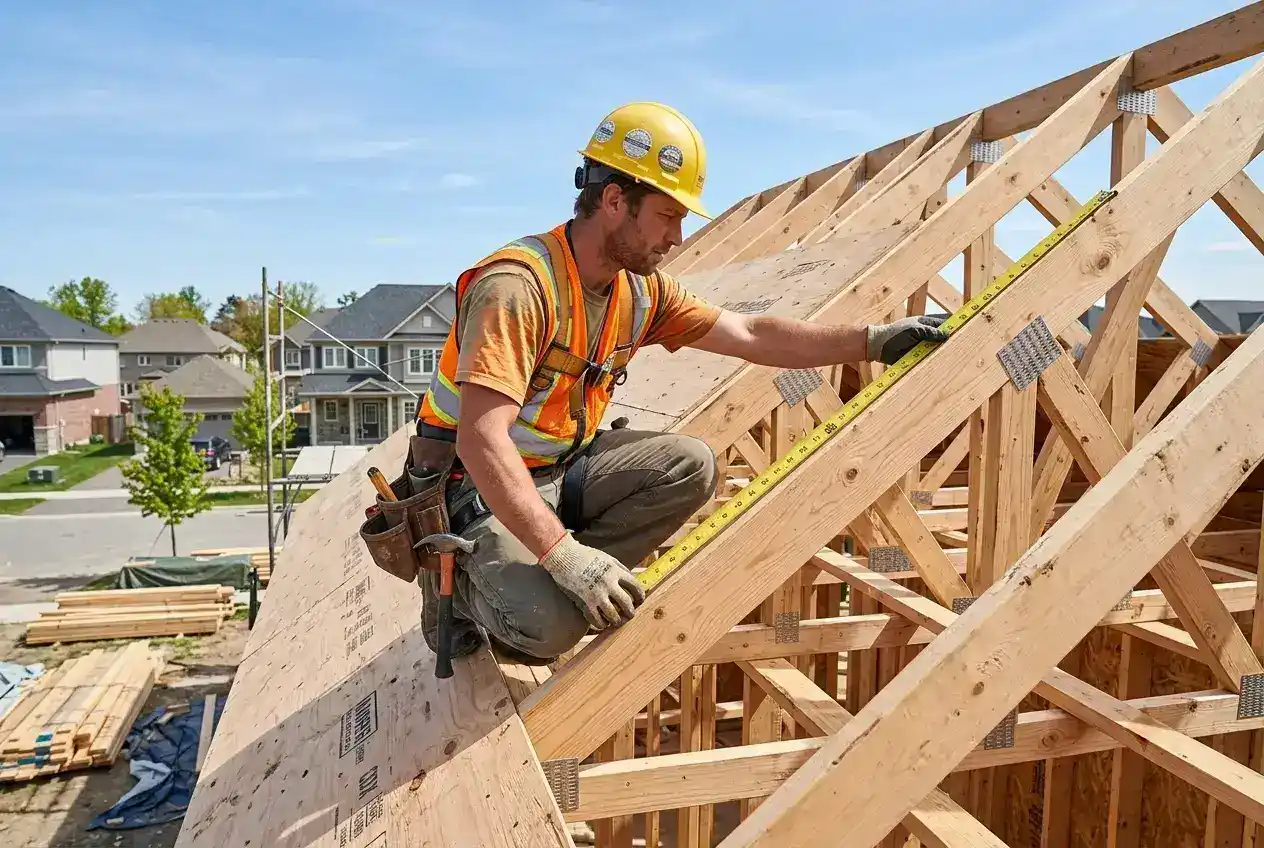
Roof Types Guide
Different roof types have different shapes and calculation methods. Choose the right type for your project:
| Roof Type | Description | Common Use |
|---|---|---|
| Gable | Two sloping sides meeting at a central ridge | Most common residential roof |
| Hip | Four sloping sides, all sides slope down to the walls | High wind areas, modern homes |
| Gambrel | Two slopes on each side (steep lower, shallow upper) | Barns, Dutch Colonial homes |
| Mansard | Four sides with two slopes each (gambrel on all sides) | French architecture, maximum attic space |
| Shed / Skillion | Single sloping surface, one direction | Additions, modern homes, lean-tos |
How to Calculate Roof Area
Calculating roof area for a standard gable roof follows a straightforward process:
- Step 1: Measure the footprint — Record the length and width of the roof from ground level. These are the horizontal dimensions, not the sloped surface.
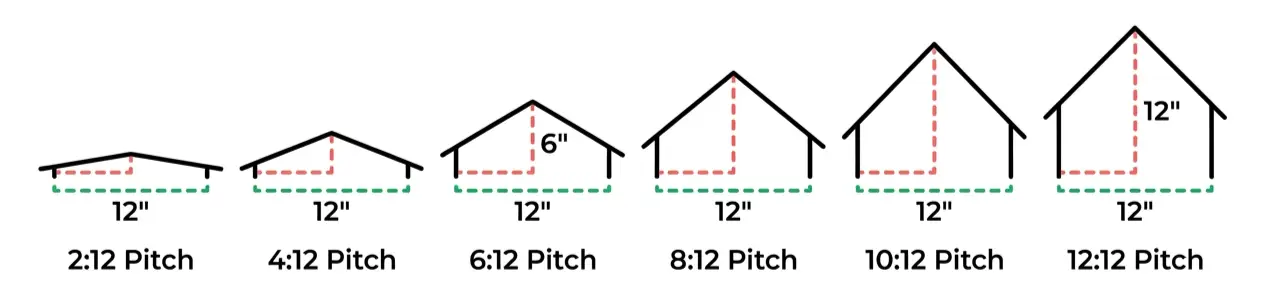
- Step 2: Determine the pitch — Measure the roof pitch by finding the vertical rise over a 12-inch horizontal run. Common pitches are 4:12, 6:12, and 8:12.
- Step 3: Calculate the pitch multiplier — Use the formula: Multiplier = √(1 + (pitch/12)²). This accounts for the slope.
- Step 4: Calculate actual roof area — Multiply the footprint area by the pitch multiplier to get the total roof surface area.
- Step 5: Convert to squares — Divide the total area by 100 to get roofing squares. Each square equals 100 square feet.
- Step 6: Calculate shingle bundles — Multiply squares by 3 to get the number of bundles. Add 10-15% for waste.
Formula: Roof Area = (Length × Width) × √(1 + (Pitch/12)²)
💡 Building a concrete roof deck? Use our concrete calculator to estimate the slab volume, or check the rebar calculator for steel reinforcement needs.
Roof Pitch Guide
Roof pitch is the angle of slope expressed as a ratio of vertical rise to horizontal run (inches of rise per 12 inches of run). The pitch determines the roof's steepness and affects both appearance and water runoff.
| Pitch | Multiplier | Slope Angle | Description |
|---|---|---|---|
| 1:12 | 1.003 | 4.8° | Nearly flat |
| 2:12 | 1.014 | 9.5° | Low slope |
| 3:12 | 1.031 | 14.0° | Low slope |
| 4:12 | 1.054 | 18.4° | Low-medium slope |
| 5:12 | 1.083 | 22.6° | Low-medium slope |
| 6:12 | 1.118 | 26.6° | Standard pitch |
| 7:12 | 1.158 | 30.3° | Medium slope |
| 8:12 | 1.202 | 33.7° | Medium-steep |
| 9:12 | 1.250 | 36.9° | Medium-steep |
| 10:12 | 1.302 | 39.8° | Steep slope |
| 11:12 | 1.357 | 42.5° | Steep slope |
| 12:12 | 1.414 | 45.0° | Very steep |
Note: The pitch multiplier increases the total roof area. A 12:12 pitch adds about 41% more area than a flat roof. Every value above is computed from the same formula the calculator uses: Multiplier = √(1 + (pitch ÷ 12)²), and the slope angle is arctan(pitch ÷ 12).
Roofing Materials
Understanding the different roofing materials helps you choose the right product for your project and budget:
| Material | Coverage/Bundle | Lifespan | Cost Range |
|---|---|---|---|
| 3-Tab Asphalt | 33.3 sq ft | 15-20 years | $25-$35/bundle |
| Architectural Asphalt | 33.3 sq ft | 25-30 years | $35-$50/bundle |
| Metal | Varies | 40-70 years | $100-$400/square |
| Clay/Concrete Tile | Varies | 50+ years | $200-$600/square |
| Wood Shingles | 25 sq ft | 25-30 years | $60-$100/square |
| Slate | Varies | 75-150 years | $300-$800/square |
Roofing Material Pros and Cons
Each roofing material has its strengths and weaknesses. Here's a quick comparison to help you decide:
✓ Easy to install and repair
✓ Lightweight
✗ Limited color options
✗ Less wind resistance
✓ Dimensional, textured look
✓ 25-30 year lifespan
✗ Heavier than 3-tab
✗ Still shorter than metal/tile
✓ Excellent wind resistance
✓ Energy efficient (reflects heat)
✗ Can dent from hail
✗ Noisier in rain
✓ Fire resistant
✓ Classic, elegant appearance
✗ Expensive to install
✗ Can crack under impact
✓ Natural, elegant appearance
✓ Fire and weather resistant
✗ Very heavy (needs structural support)
✗ Difficult to repair
Tips for Roofing Projects
- Always order extra — Add 10-15% waste for standard roofs and 15-20% for complex roofs with valleys and hips. It's better to have extra shingles for future repairs.
- Check the bundle count — Most shingles are sold in bundles that cover 33.3 square feet. Three bundles make one square (100 sq ft).
- Account for dormers and valleys — These features add complexity and require more cuts, increasing waste. Measure each section separately if possible.
- Don't forget underlayment — You'll need the same roof area coverage for underlayment (felt or synthetic) and ice/water shield in vulnerable areas.
- Order ridge caps separately — Ridge cap shingles are sold separately and are needed for the roof ridges and hips.
- Plan for roof access — Need permanent stairs to access your roof? Use our stair calculator to design safe roof access stairs.
Material Costs
Roofing material costs vary by type, quality, and region. Here are typical 2026 price ranges per square (100 sq ft):
| Material | Materials Only | Installed |
|---|---|---|
| 3-Tab Asphalt | $75 – $105 | $350 – $500 |
| Architectural Asphalt | $100 – $150 | $400 – $600 |
| Metal | $100 – $400 | $600 – $1,200 |
| Clay/Concrete Tile | $200 – $600 | $800 – $1,500 |
| Slate | $600 – $1,500 | $1,500 – $3,000 |
Roof Replacement Cost by House Size
Here are typical roof replacement costs based on house size. Roof area is approximately 1.5x the house footprint to account for pitch and overhangs.
| House Size | Roof Area | Asphalt Shingles | Metal Roofing |
|---|---|---|---|
| 1,000 sq ft | ~1,500 sq ft | $5,250 – $9,000 | $9,000 – $18,000 |
| 1,500 sq ft | ~2,250 sq ft | $7,875 – $13,500 | $13,500 – $27,000 |
| 2,000 sq ft | ~3,000 sq ft | $10,500 – $18,000 | $18,000 – $36,000 |
| 2,500 sq ft | ~3,750 sq ft | $13,125 – $22,500 | $22,500 – $45,000 |
| 3,000 sq ft | ~4,500 sq ft | $15,750 – $27,000 | $27,000 – $54,000 |
* Costs include materials and labor (labor at $200/square default). Actual costs vary by location, roof complexity, and contractor.
Worked Example
Let us calculate roofing materials for a 40-foot × 30-foot house with a 12-inch eave overhang, 6:12 pitch, and 10% waste allowance.
Step 1: Calculate the roof plane dimensions (with overhang)
Step 2: Calculate footprint area
Step 3: Calculate pitch multiplier
Step 4: Calculate actual roof area
Step 5: Convert to roofing squares
Step 6: Calculate shingle bundles
Step 7: Add 10% waste
Step 8: Add ridge cap bundles
Step 9: Calculate materials cost
Step 10: Calculate labor cost
Step 11: Calculate removal cost (optional)
Step 12: Total project cost
* Without removal cost: $1,925 + $3,200 = $5,125
Frequently Asked Questions
References
- National Roofing Contractors Association, "NRCA Roofing Manual," nrca.net
- Asphalt Roofing Manufacturers Association, "ARMA Residential Asphalt Roofing Manual," asphaltroofing.org
- International Code Council, "International Residential Code (IRC)," Chapter 9 — Roof Assemblies, iccsafe.org
- Federal Emergency Management Agency, "Safe Rooms for Tornadoes and Hurricanes," fema.gov
Disclaimer: The roofing calculator results on this page are planning estimates only. Actual square counts vary with roof geometry, shingle exposure, starter and ridge treatment, and cutting waste, and underlayment and fastener quantities vary with slope and wind exposure. Confirm bundle coverage and pricing with your supplier, and have steep or complex roofs measured and worked on by qualified roofers.
Need a precise estimate for your roofing project?
Get Free Estimates