
Enter Concrete Dimensions
Choose a project type, fill in dimensions, and enter optional price. Results update live.


Results
Volume
Weight
Pre-Mixed Bags Needed
Cost Estimate
Calculation Assumptions
What You Get
- ✓Free — no sign-up, nothing to install
- ✓Live results as you type
- ✓Feet, inches, cm, meters & yards — mix any units
- ✓Export a PDF takeoff in one click
- ✓Shareable link that saves your inputs
- ✓Works on phone, tablet & desktop
- ✓Slab, footing, column, steps & curb shapes
- ✓Ready-mix yards or bag counts
- ✓Multiple bag size options
ON THIS PAGE:
What Is a Concrete Calculator
A concrete calculator estimates how much concrete you need for a construction project based on the dimensions you enter. It converts your measurements into cubic yards, tells you how many pre-mixed bags to buy, and calculates the estimated weight and cost.
Concrete is sold by the cubic yard for ready-mix deliveries or in pre-mixed bags (50 lb, 60 lb, or 80 lb) for smaller projects. Getting the right amount is critical because concrete must be poured in a single batch — if you run short, you risk a cold joint that weakens the structure.
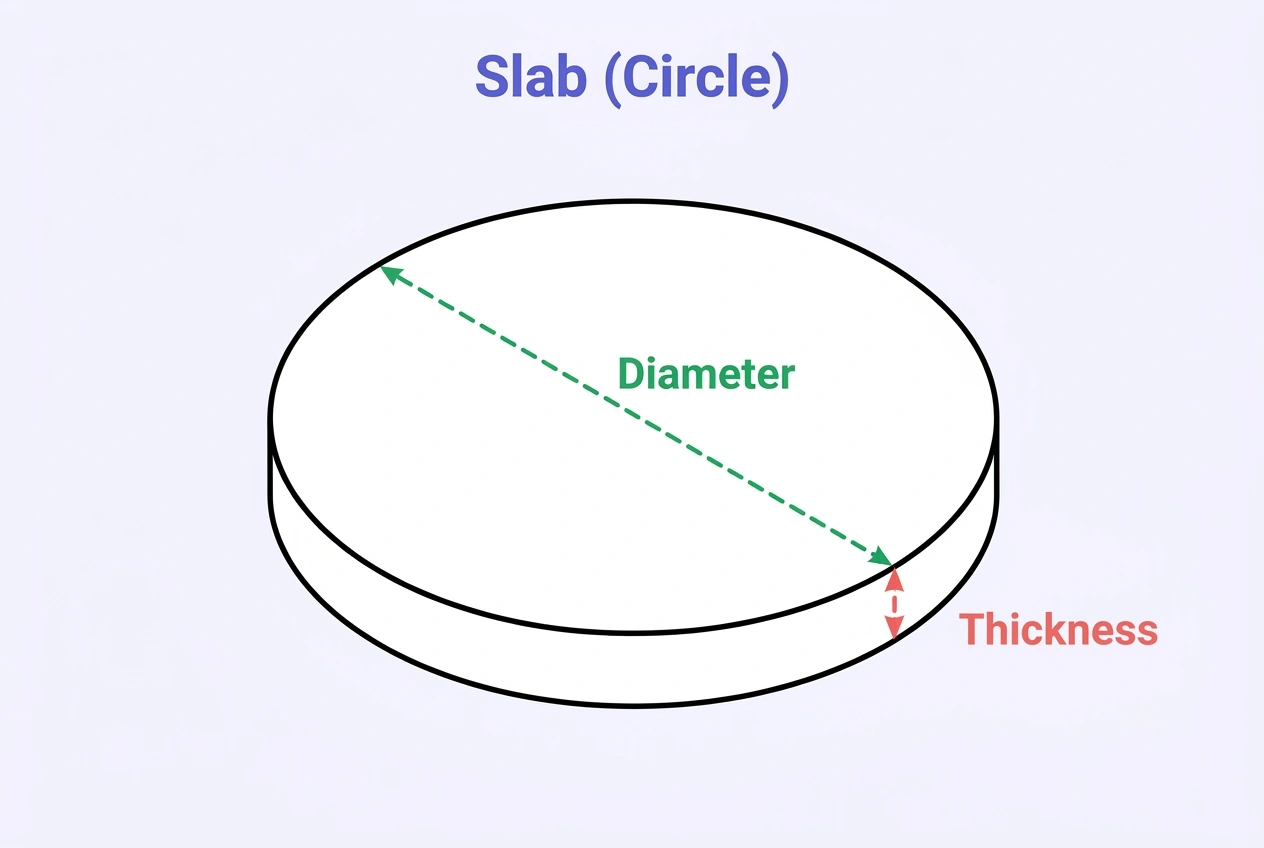
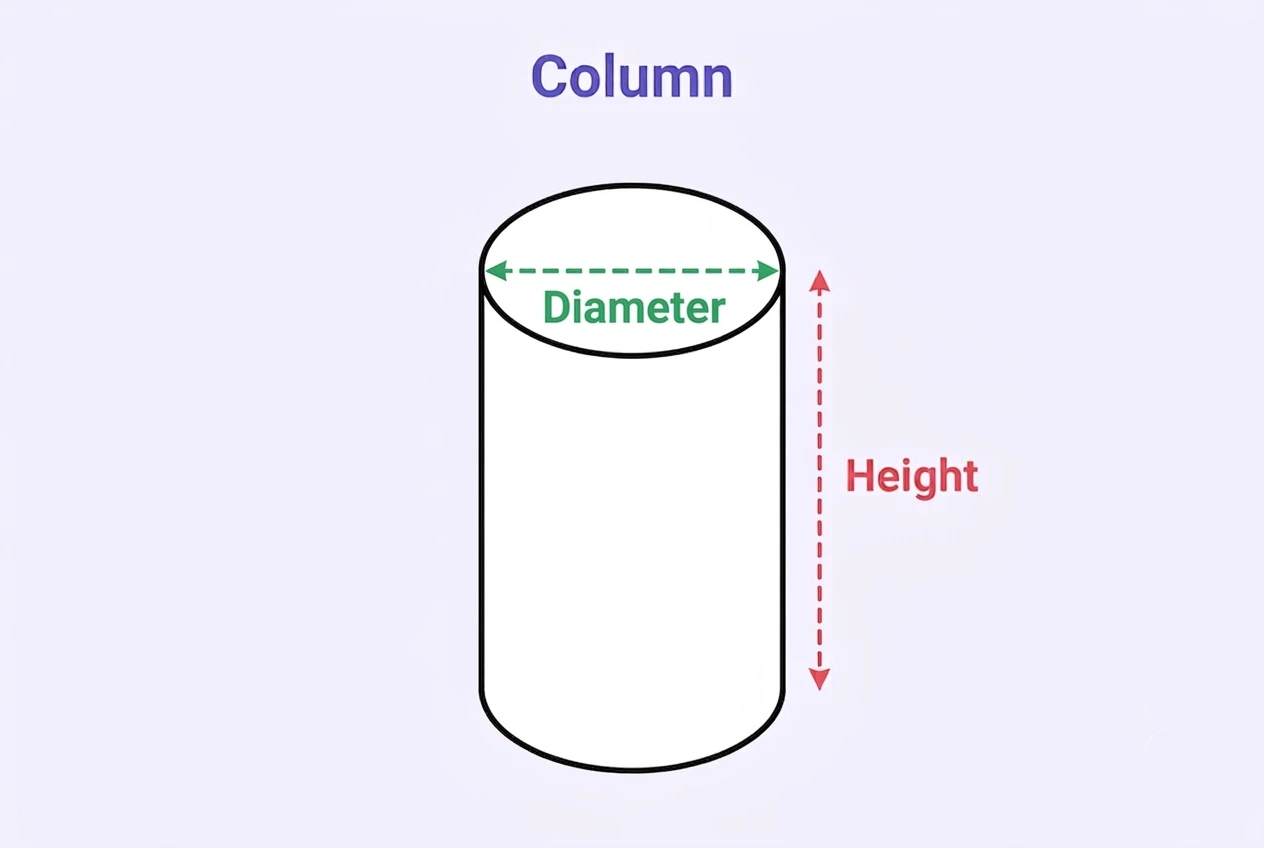
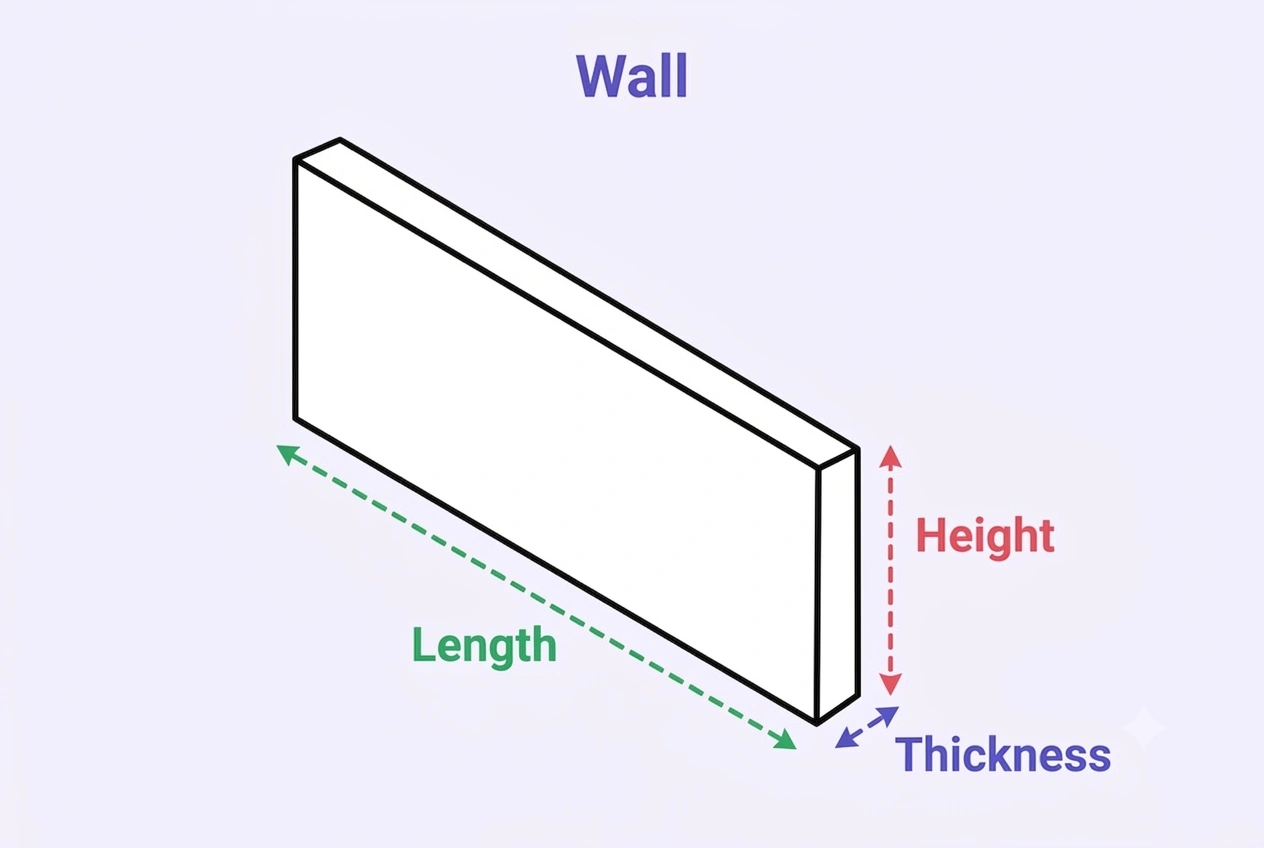
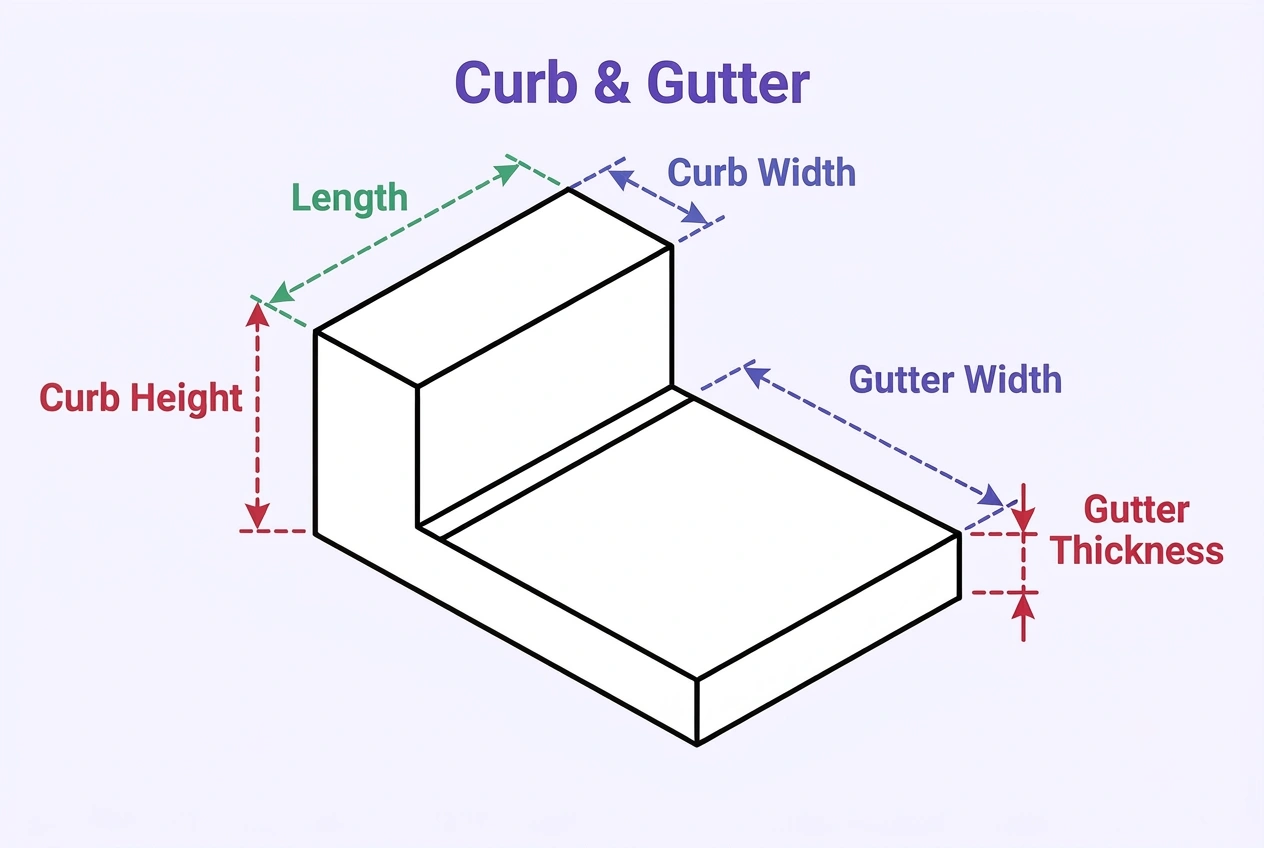
Our calculator supports seven common project types: rectangular slabs, circular slabs, footings, columns, walls, steps, and curb & gutter. It accounts for waste and lets you enter an optional price per cubic yard for cost estimation.
How to Calculate Concrete
Calculating concrete is straightforward once you know the volume formula for your project shape. Here are the general steps:
- Step 1: Measure the dimensions
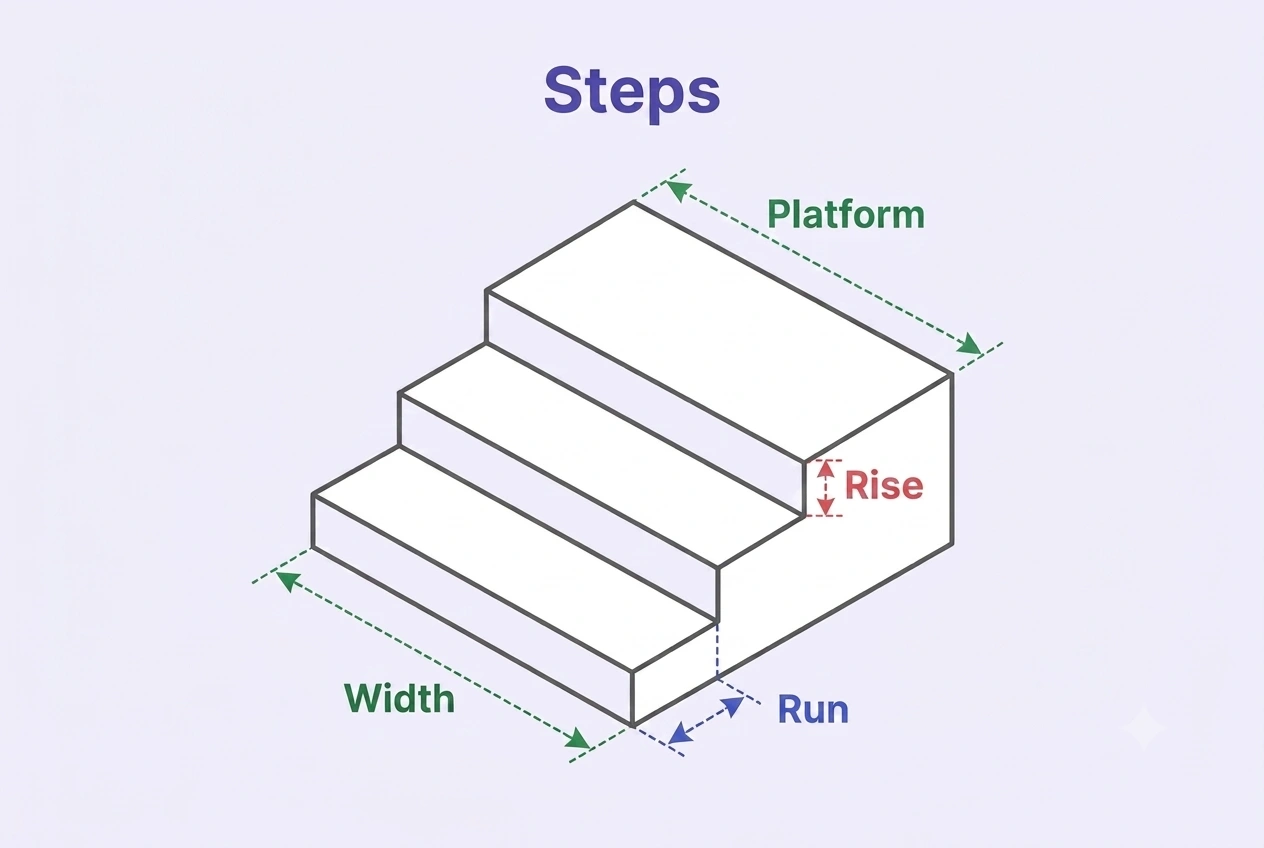
Record the length, width, and height (or thickness) of the area in feet. For circular areas, measure the diameter. For steps, measure the rise and run of each step.
- Step 2: Calculate the volume in cubic feet
Multiply the dimensions together. For rectangular areas: Length x Width x Height. For circular areas: Pi x Radius x Radius x Height.
- Step 3: Convert to cubic yards
Divide the cubic feet by 27 (since 1 cubic yard = 27 cubic feet). Round up to the nearest quarter yard.
- Step 4: Add 5-10% for waste
Account for spillage, uneven ground, and settling. This ensures you complete the pour without running short.
- Step 5: Estimate bags or order ready-mix
For small projects, use pre-mix bags. For large projects, order ready-mix by the cubic yard from a concrete supplier.
Concrete Volume Formulas
Use the appropriate formula based on your project shape:
Rectangular Slab / Footing / Wall
Circular Slab / Column
Steps
A poured staircase is one monolithic shape: step n carries the full height of every step above it (step 1 rises 1×rise, step 2 rises 2×rise, and so on). The stack heights 1 + 2 + … + n = n(n+1)/2, so the volume is a single block volume multiplied by that triangular number. Never multiply one step's block volume by the count — that ignores the concrete hidden beneath each tread and underestimates a real pour by roughly half.
How Many Bags of Concrete Do You Need?
Pre-mixed concrete bags are available in three common sizes. The number of bags needed per cubic yard varies by bag size:
| Bag Size | Cubic Feet per Bag | Bags per Cubic Yard |
|---|---|---|
| 50 lb | 0.375 cu ft | 75 bags |
| 60 lb | 0.45 cu ft | 60 bags |
| 80 lb | 0.60 cu ft | 45 bags |
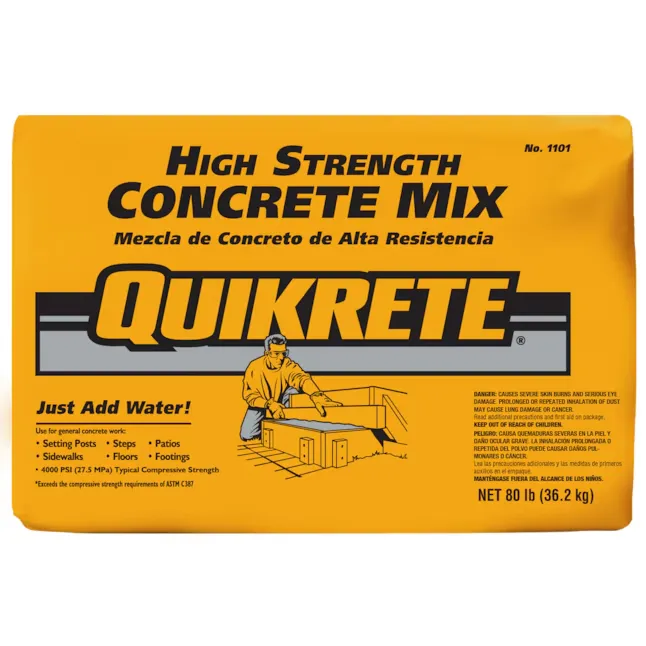
For example, a 10 x 10 foot slab at 4 inches thick requires about 1.23 cubic yards. Using 80 lb bags, that is approximately 55 bags (1.23 x 45) without waste. Add 10% for waste to get roughly 62 bags.
Concrete Cost per Yard
The cost of concrete depends on whether you order ready-mix or use pre-mix bags:
| Type | Typical Price Range |
|---|---|
| Ready-mix (per cubic yard) | $125 – $195 |
| Pre-mix 50 lb bag | $4 – $5 |
| Pre-mix 60 lb bag | $5 – $6 |
| Pre-mix 80 lb bag | $6 – $7 |
Ready-mix concrete is more cost-effective for large pours. Pre-mix bags are better for small projects, repairs, or areas where a concrete truck cannot reach. Additional costs include delivery fees, labor, reinforcement (rebar or mesh), and finishing.
Types of Concrete
Concrete comes in several varieties, each suited for different applications:
- Standard (Regular) Concrete: The most common type, made of cement, sand, gravel, and water. Suitable for sidewalks, driveways, and general construction.
- High-Strength Concrete: Has a compressive strength greater than 6,000 psi. Used in high-rise buildings and bridges.
- Reinforced Concrete: Contains steel rebar or mesh to increase tensile strength. Essential for structural elements like beams, columns, and slabs.
- Lightweight Concrete: Uses lightweight aggregates like pumice or perlite. Density below 110 lb/ft³. Good for insulation and precast panels.
- Self-Consolidating Concrete: Flows easily without vibration. Ideal for complex forms and congested reinforcement.
- Stamped Concrete: Decorative concrete that mimics stone, brick, or tile. Common for patios, pool decks, and driveways.
- Ready-Mix Concrete: Pre-mixed at a plant and delivered by truck. Best for large pours requiring consistent quality.
Tips for Pouring Concrete
The real work starts long before the concrete truck pulls up. First, measure and lay out your site, then build forms to shape the edges of your slab or contain the footing. Getting this right upfront saves headaches later.
A solid base makes all the difference. Lay down compacted gravel or crushed stone to create proper drainage and a stable foundation. For slabs that need to carry weight, reinforce with rebar or wire mesh — it helps prevent cracks down the road. Use a rebar calculator to figure out how much you need.
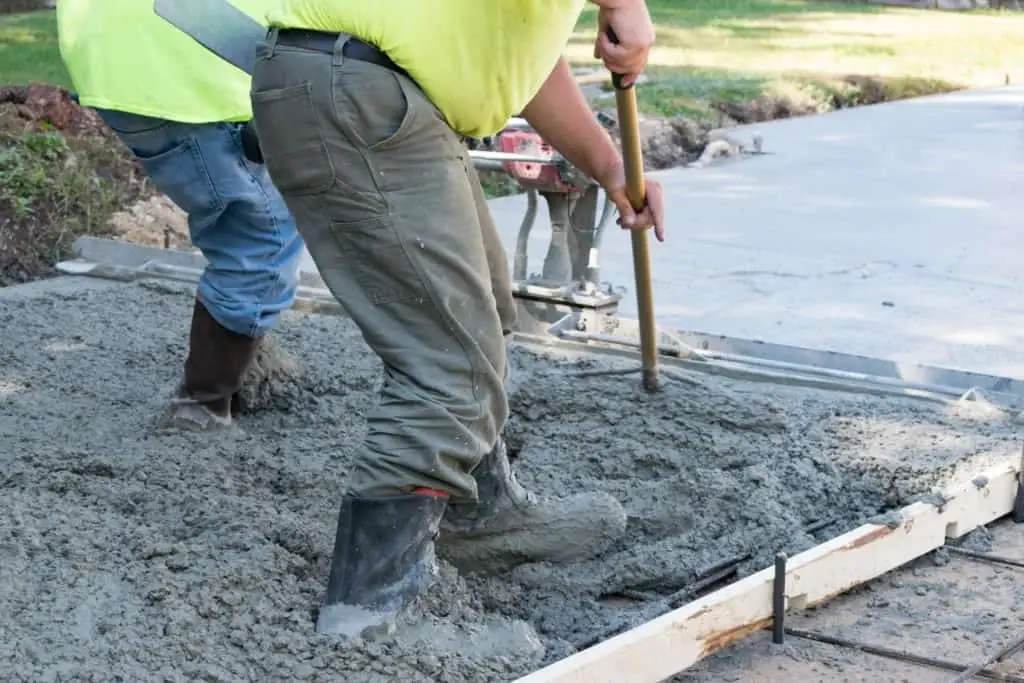
Timing matters once the truck arrives. Have your crew, tools, and forms ready to go — concrete starts setting within 20-30 minutes. Pour, spread, and smooth it out before it stiffens. A bull float works well for large surfaces, while a hand float handles the edges.
After finishing, keep the concrete moist for 5-7 days using curing compound or plastic sheeting. This prevents cracking and ensures a strong final product. And always order 5-10% more than your calculations suggest — spillage, uneven ground, and settling can eat into your supply faster than you'd expect.
Concrete Weight & Density
Understanding concrete weight is important for structural planning and delivery logistics:
| Measurement | Value |
|---|---|
| Density (standard) | 150 lb/ft³ (2,400 kg/m³) |
| Weight per cubic yard | 4,050 lbs (1,837 kg) |
| Weight per cubic foot | 150 lbs (68 kg) |
| Weight per cubic meter | 2,400 kg (5,291 lbs) |
Lightweight concrete can weigh as little as 90 lb/ft³, while high-density concrete can exceed 300 lb/ft³. Standard structural concrete uses the 150 lb/ft³ default.
Worked Example
Let us calculate concrete for a 10 ft x 10 ft patio slab that is 4 inches thick:
Step 1: Convert thickness to feet
Step 2: Calculate volume in cubic feet
Step 3: Convert to cubic yards
Step 4: Add 10% waste
Step 5: Calculate bags needed
Step 6: Estimate cost
This matches what our calculator shows for these dimensions. Enter your own numbers above to get instant results.
Frequently Asked Questions
References
- Family Handyman, "How to Estimate a Concrete Order," familyhandyman.com
- National Ready Mixed Concrete Association, "CIP 31 - Ordering Ready Mixed Concrete," nrmca.org
- American Concrete Institute, "ACI 318 Building Code for Structural Concrete," concrete.org
- U.S. Department of Transportation, "Module G: Portland Cement Concrete - Construction Practices," fhwa.dot.gov
Disclaimer: The concrete calculator results on this page are estimates for planning purposes only. Actual material quantities may vary based on site conditions, local building codes, and construction methods. Always consult a licensed contractor and verify requirements for your specific project before purchasing materials or beginning construction.
Need Concrete Poured?
Get free estimates from licensed concrete contractors in your area.
Get Free Estimates